What Is the Westminster Chime? Its History, Origin and Meaning
There are certain sounds that instantly feel familiar.
For clock lovers, few sounds are more recognizable than the Westminster chime. Even people who do not know the name often know the melody. It is the classic quarter-hour chime heard in countless mantel clocks, wall clocks, grandfather clocks, and tower clocks around the world.
But the history of the Westminster chime is a little more surprising than many people realize.
It did not actually begin in Westminster.
It Started as the Cambridge Quarters
The melody we now call the Westminster chime originally began as the Cambridge Quarters.
It was first associated with Great St Mary’s Church in Cambridge, England, in 1793. The chime was created for the church clock and used a short musical pattern to mark the passing quarters of the hour.
At the first quarter, a short phrase plays.
At the half hour, the melody grows.
At the three-quarter hour, more of the sequence is heard.
At the top of the hour, the full chime plays before the hour is struck.
That structure is one of the reasons the chime became so successful. It is simple enough to remember, but musical enough to feel important. It does not merely announce the time. It gives the hour a sense of ceremony.
So Why Is It Called the Westminster Chime?
The name comes from the Palace of Westminster in London, home of the famous Great Clock and Big Ben.
When the new Palace of Westminster was being built after the fire of 1834, a grand clock tower became part of the design. The goal was not just to build a clock, but to build one of the most accurate and impressive public clocks in the world.
Edmund Beckett Denison, the amateur horologist involved in the design of the Great Clock, chose the Cambridge Quarters for the four smaller quarter bells. Once those chimes became associated with the Palace of Westminster and Big Ben, the melody gradually became known as the Westminster chime.
In other words, the tune began in Cambridge, but Westminster made it famous.
Why Was That Chime Chosen?
There are a few reasons the Cambridge Quarters were a natural choice.
First, the melody worked beautifully for a public clock. It was short, clear, and easy to recognize from a distance. A tower clock needs a chime that carries well and can be understood by people going about their day.
Second, the pattern fit the quarters of the hour perfectly. The chime builds as the hour progresses, giving people an audible sense of time passing.
Third, it sounded dignified. The Palace of Westminster was not an ordinary building. It was the home of Parliament, and the clock needed a sound that felt serious, orderly, and memorable.
That is exactly what the chime delivered.
The Role of Big Ben
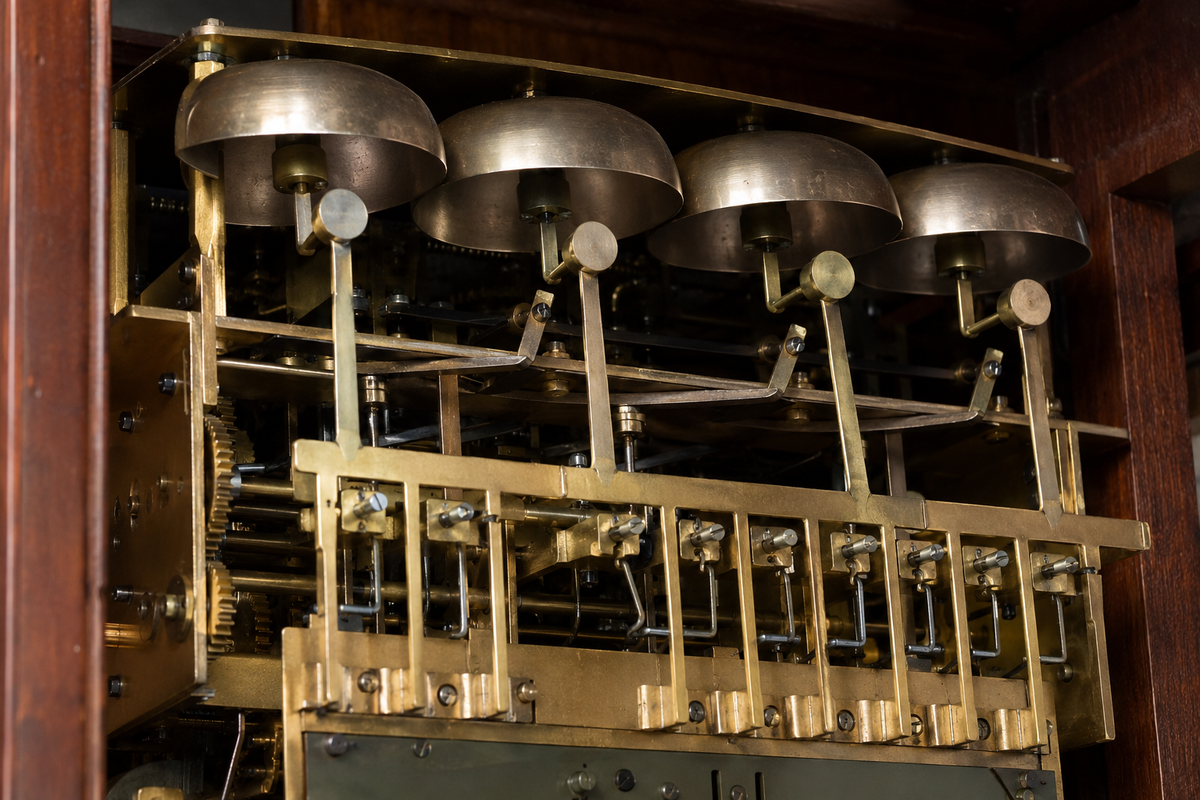
Many people call the whole clock tower “Big Ben,” but technically Big Ben is the nickname of the Great Bell. The quarter-hour melody is played by the smaller bells, while the Great Bell strikes the hour.
Still, the public association was powerful. Once people heard the chimes from Westminster, the melody became linked forever with one of the most famous clocks in the world.
Later, radio broadcasts helped spread the sound even farther. The chimes became more than a London landmark. They became a symbol of tradition, punctuality, and public timekeeping.
How It Entered the Home
Once the Westminster chime became famous, clockmakers began using it in domestic clocks.
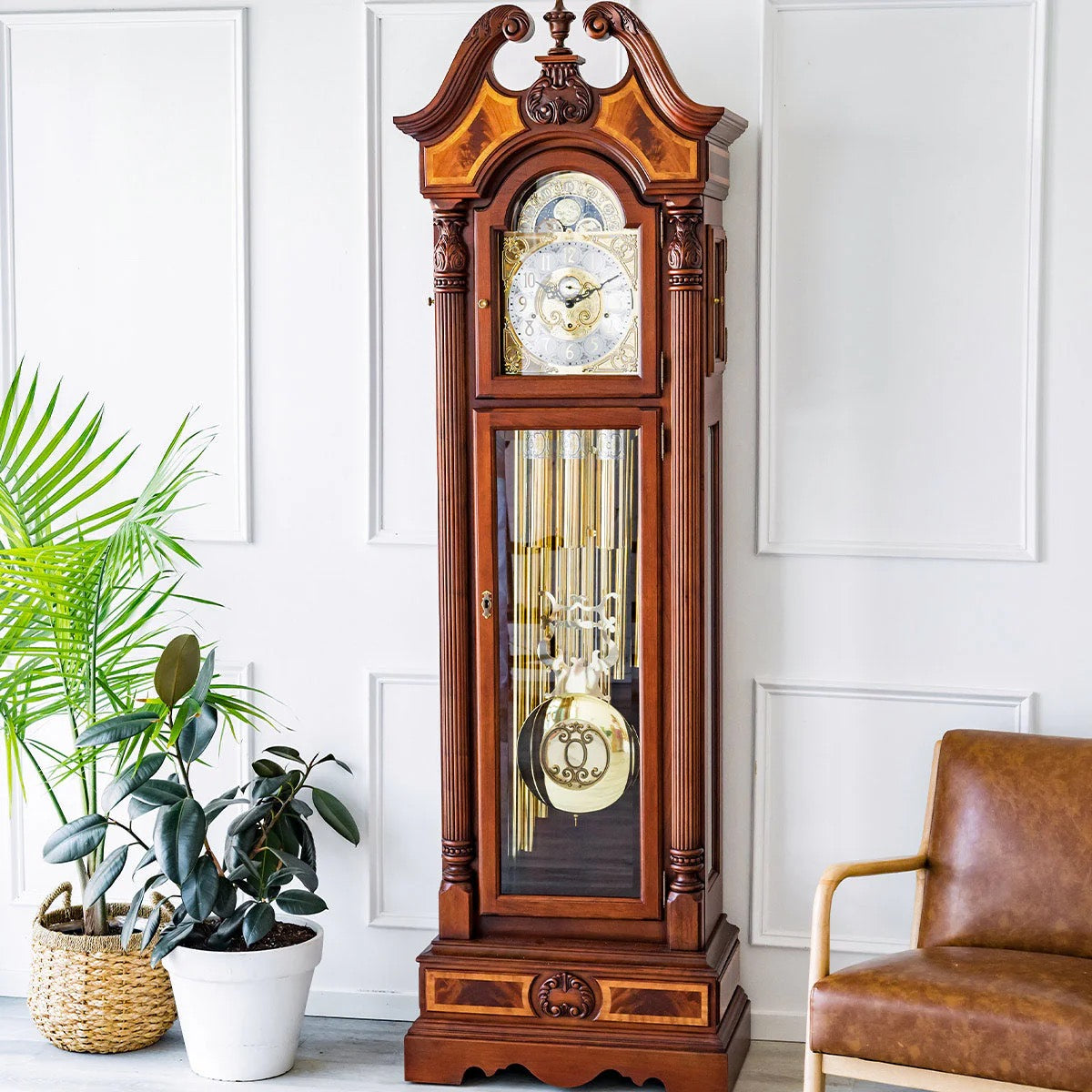
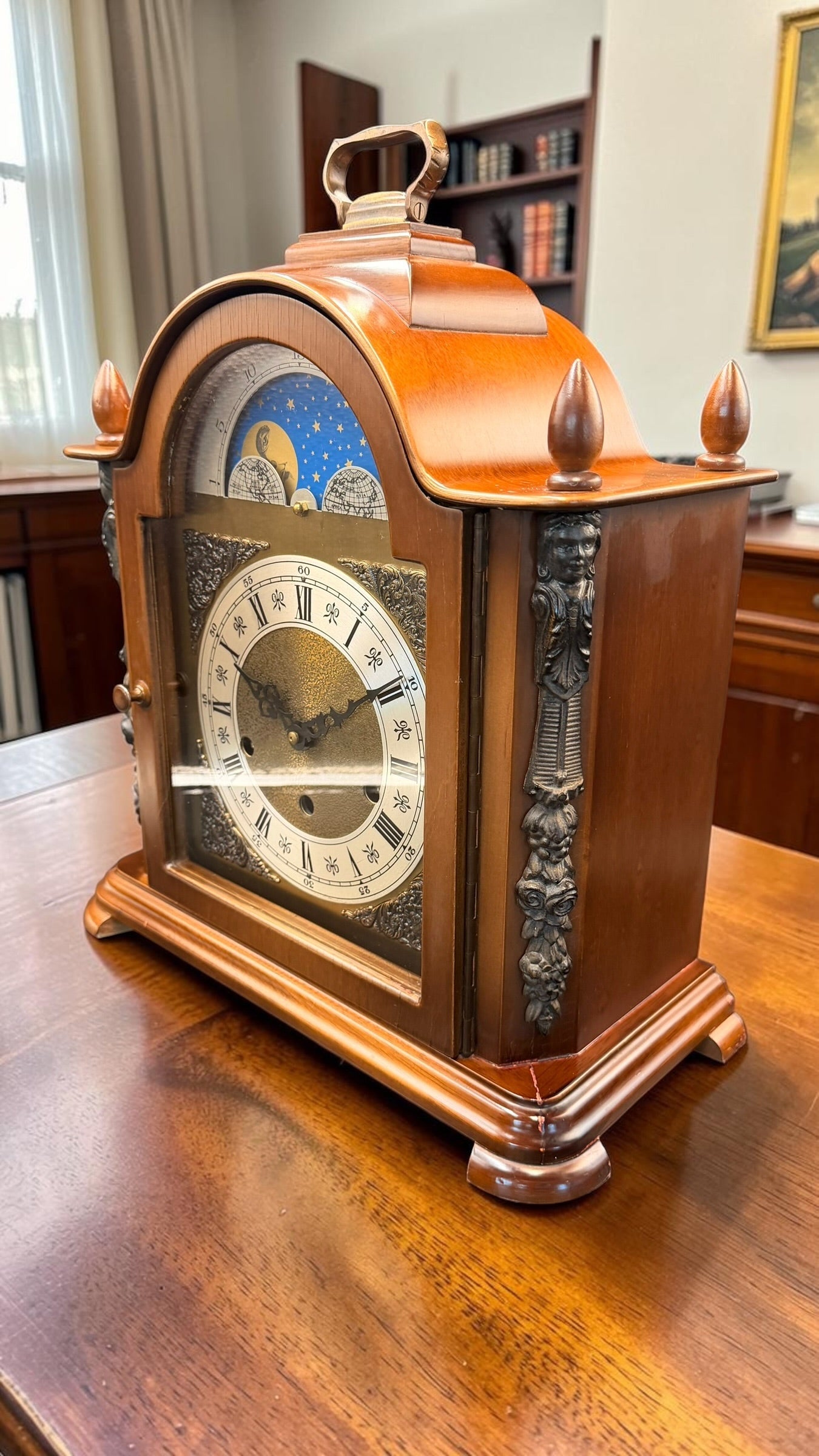
Mantel clocks, bracket clocks, wall clocks, and grandfather clocks adopted the chime because customers already recognized it. It sounded proper. It sounded traditional. It sounded like what a fine clock was supposed to sound like.
That is why so many mechanical clocks, especially from the 20th century onward, feature Westminster as their primary chime.
For many buyers, Westminster became the default sound of a “real” chiming clock.
Why Collectors Still Love It
Collectors love the Westminster chime because it connects a household clock to a much larger history.
When a mantel clock plays Westminster, it is not just making a pleasant sound. It is carrying forward a musical tradition that began in Cambridge and became famous through one of the world’s most recognized public clocks.
That history gives the chime its staying power.
It is elegant without being overly complicated. It is familiar without feeling ordinary. It is musical, but still practical. It tells the time while also giving the clock personality.
A Small Bit of Clock Lore
There is also a long-standing tradition that the Westminster chime may have been inspired by a passage from Handel’s Messiah. That connection is often repeated in clock history, although it is best treated as tradition rather than absolute fact.
Either way, the melody has clearly earned its place in clockmaking history.
Whether heard from a church tower, a Parliament clock, a grandfather clock, or a finely made mantel clock, the Westminster chime has become one of the most beloved sounds in mechanical timekeeping.
More Than Just a Melody
The Westminster chime became popular because it did several things well at once.
It marked the quarters clearly.
It sounded beautiful.
It carried across distance.
It gave the hour a sense of importance.
And perhaps most importantly, it became familiar.
That familiarity is why the Westminster chime remains so loved today. It is not just a tune. It is part of the language of clocks.
For collectors, that is what makes it special. A Westminster chime clock does more than tell time. It connects the home to centuries of musical and mechanical tradition.

Just A Clock Collector