Tubular Bell vs. Chime Rod Clocks: What Is the Difference?
Not all chiming clocks sound the same.
Two clocks may both play Westminster, Whittington, or St. Michael, but the sound can be completely different depending on what the hammers are striking.
That is where the difference between tubular bells and chime rods comes in.
Both are used in mechanical clocks. Both can produce beautiful chimes. But they do not create the same experience.
A chime rod clock usually gives you the familiar classic clock sound.
A tubular bell clock gives you a deeper, richer, more resonant sound that many collectors consider the grandest form of mechanical clock chime.
What Are Chime Rods?
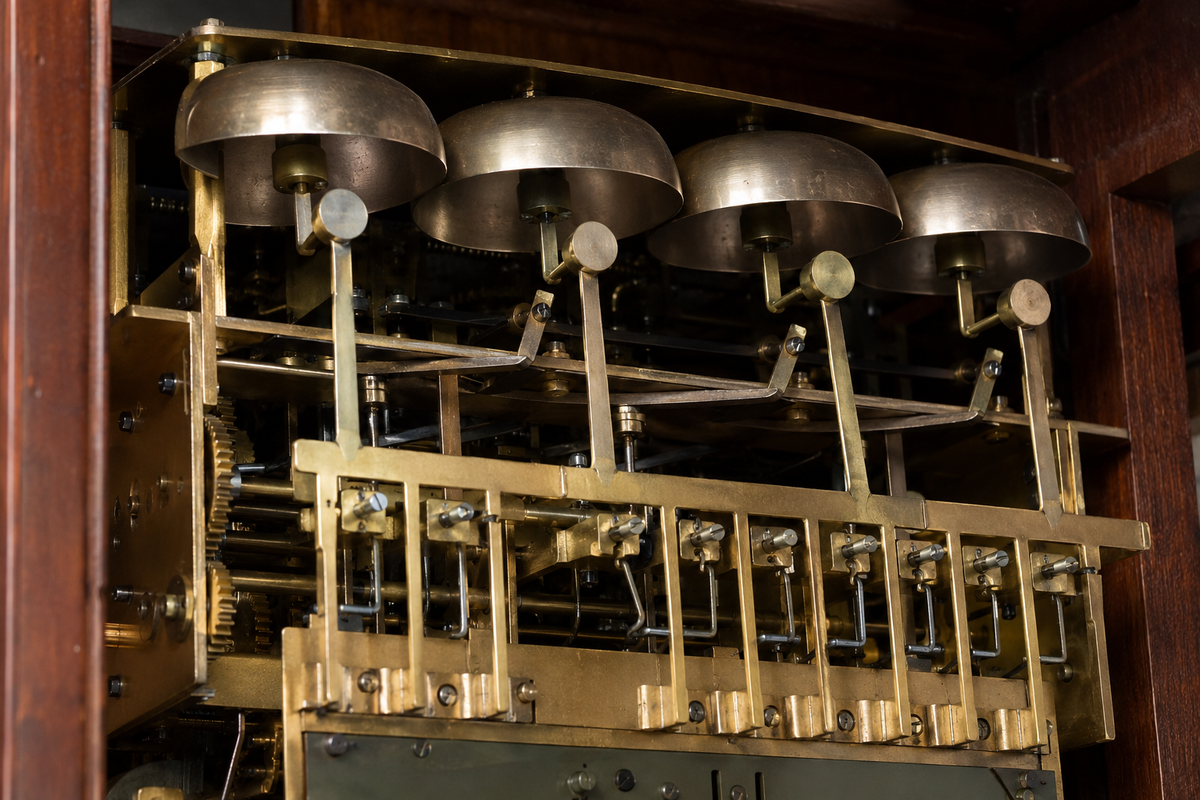
Chime rods are tuned metal rods mounted to a block inside the clock case. When the clock chimes, small hammers strike the rods to create the melody.
This is one of the most common sound systems found in mechanical mantel clocks, wall clocks, and grandfather clocks.
The rods are usually different lengths so they can produce different notes. The movement controls which hammers lift and fall, allowing the clock to play a melody such as Westminster, Whittington, or St. Michael.
Chime rods are popular because they work well, fit in many clock cases, and provide the classic sound most people associate with a traditional mechanical clock.
What Are Tubular Bells?
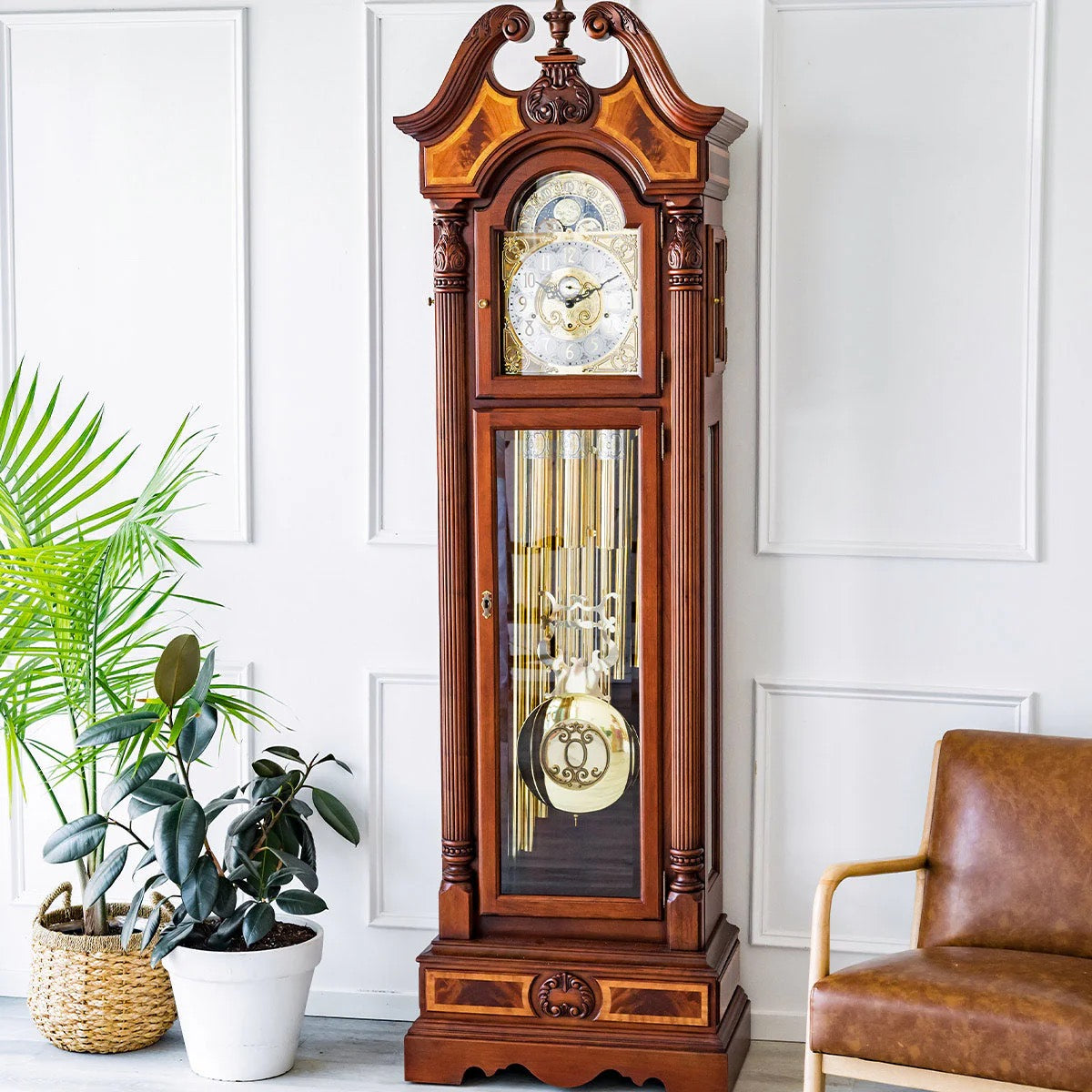
Tubular bells are long, tuned metal tubes suspended inside the clock case. Instead of striking short rods mounted to a block, the hammers strike the tubes.
The result is usually a much larger and more resonant sound.
Tubular bell clocks are most often found in higher-end floor clocks and longcase clocks because the tubes need space. They are usually not something you find in a small mantel clock.
The tubes are part of what gives these clocks their grand presence. They do not just chime. They fill the room.
The Biggest Difference Is the Sound
The easiest way to understand the difference is this:
Chime rods sound classic.
Tubular bells sound grand.
A good chime rod clock can be warm, pleasant, and very musical. It has the familiar tone many people expect from a mantel clock, wall clock, or grandfather clock.
A tubular bell clock usually has more depth. The notes ring longer. The sound feels more open and powerful. Many people describe it as church-like, cathedral-like, or orchestral.
That does not mean rods are bad. Not at all.
A high-quality rod chime clock can sound beautiful. But tubular bells usually have a larger and more luxurious sound.
Why Tubular Bell Clocks Feel More Premium
Tubular bell clocks are usually considered more premium for a few reasons.
First, the sound is larger and more resonant.
Second, the clock case must be built to handle the tubes properly.
Third, the movement and hammer system are often more complex.
Fourth, tubular bell clocks are usually found in higher-end floor clocks rather than ordinary household clocks.
Because of that, a tubular bell clock often feels like a statement piece. It is not just there to tell time. It is there to create an experience.
When properly set up, a tubular bell clock can become the centerpiece of a room.
Why Chime Rod Clocks Are Still Excellent
Chime rod clocks should not be dismissed.
In fact, most chiming clocks use rods, and many of them sound wonderful. Rods are practical, reliable, and capable of producing a clear, beautiful melody.
They also allow clockmakers to build chiming clocks in many sizes.
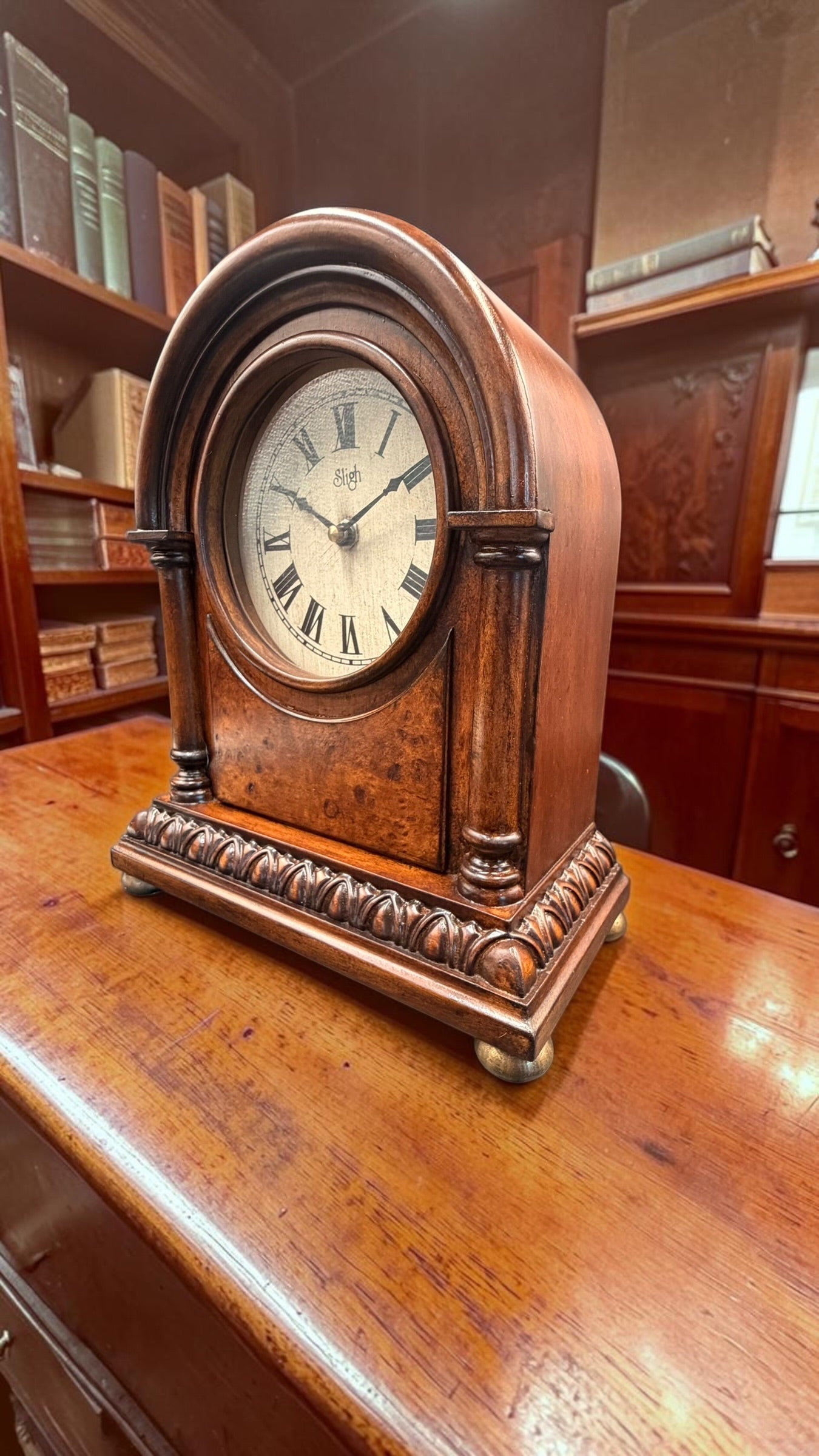
A mantel clock can use rods.
A wall clock can use rods.
A grandfather clock can use rods.
A bracket clock can use rods.
That flexibility is one reason rod chime clocks became so common.
For many homes, a good rod chime clock is actually the better choice. It gives the owner a traditional mechanical chime without needing the size, weight, or presence of a large tubular bell floor clock.
Westminster, Whittington, and St. Michael Can Be Played on Either
This is where buyers can get confused.
The chime melody and the sound system are not the same thing.
Westminster, Whittington, and St. Michael are melodies.
Chime rods and tubular bells are sound sources.
That means two clocks can both play Westminster, but one may play it on rods while the other plays it on tubular bells.
They are playing the same melody, but they will not sound the same.
It is like hearing the same song played on a piano versus a pipe organ. The notes may be related, but the experience is very different.
Which One Is Better?
Neither is automatically better for every buyer.
It depends on what you want.
If you want the classic traditional clock sound, a chime rod clock may be perfect. It is familiar, warm, and often easier to place in a home.
If you want the grandest and most dramatic sound, tubular bells are hard to beat. They have depth, sustain, and presence.
In simple terms:
Chime rods are classic and practical.
Tubular bells are grand and luxurious.
Why Case Size Matters
The clock case plays a major role in the sound.
A small case can make a chime sound tighter or brighter.
A large wood case can add warmth and depth.
A tall floor clock gives the sound more space to develop.
This is especially important with tubular bells. The tubes need room to hang and resonate. That is why they are usually found in larger floor clocks.
Chime rods are more compact, so they can work well in smaller clocks.
This is also why two clocks with the same movement and same melody can still sound different. The case is part of the instrument.
Condition Matters
With any chiming clock, condition affects sound.
The hammers need to be aligned correctly. They should strike cleanly and not rest against the rods or tubes. If a hammer is too close, too far away, or hitting off-center, the tone can suffer.
A clock that sounds dull, muted, harsh, or uneven may not be a bad clock. It may simply need adjustment or service.
This is especially important with vintage clocks. A beautiful clock may have a wonderful chime system, but if it has not been adjusted properly, you may not be hearing it at its best.
What Buyers Should Listen For
When evaluating a chime rod clock, listen for clarity.
The notes should be distinct. The chime should not sound overly tinny, dead, or rattly. The hammers should return properly after striking.
When evaluating a tubular bell clock, listen for resonance.
The notes should ring and carry. The tone should feel full and rich. The tubes should not sound flat, buzzing, or muted.
For either type, the chime sequence should play correctly, and the hour strike should match the actual hour.
Are Tubular Bell Clocks More Valuable?
Often, yes.
Tubular bell clocks are generally more expensive and more collectible, especially when they are high-quality mechanical floor clocks in excellent working condition.
But value still depends on the whole clock.
Brand matters.
Condition matters.
Case quality matters.
Movement quality matters.
Originality matters.
A damaged tubular bell clock with problems may be less desirable than a clean, properly working rod chime clock.
The sound system is important, but it is not the only factor.
The Bottom Line
Tubular bells and chime rods both have a place in clock collecting.
Chime rods give you the classic mechanical clock sound. They are common, practical, and found in many beautiful mantel, wall, and floor clocks.
Tubular bells give you a grander, deeper, more resonant sound. They are usually found in larger, higher-end clocks and are often prized by collectors for their presence and richness.
The easiest way to remember it is this:
Chime rods are the familiar voice of the traditional chiming clock.
Tubular bells are the grand voice of the mechanical floor clock.
Both can be beautiful.
But once you hear a great tubular bell clock in person, it is easy to understand why collectors get excited about them.

Just A Clock Collector