The History of the St. Michael Chime
When most people think of a chiming clock, Westminster is usually the melody that comes to mind first.
But Westminster is not the only classic chime with a story.
For many clock collectors, the St. Michael chime has a special charm because its history is tied closely to America. While Westminster points us toward London and the Palace of Westminster, the St. Michael chime points us toward Charleston, South Carolina, and one of the most historic church towers in the country.
It is elegant, traditional, and less common than Westminster. That alone makes it interesting. But the story behind the name makes it even better.
Where the St. Michael Chime Gets Its Name
The St. Michael chime is named for St. Michael’s Church in Charleston, South Carolina.
St. Michael’s is one of Charleston’s great historic landmarks. Its steeple was designed not only as part of the church, but also as a public feature for the city. In the 1700s, a tall church steeple was more than beautiful architecture. It could serve as a landmark, a lookout point, and a place for bells and a public clock.
That is exactly what happened at St. Michael’s.
In 1764, an English-made clock and a ring of bells were installed in the steeple. At the time, public clocks were extremely important. Not everyone owned a watch or household clock, so the sound of a tower clock helped organize daily life.
The bells at St. Michael’s did more than make music. They helped tell Charleston what time it was.
Charleston’s Public Timekeeper
Today, we take accurate time for granted. Phones, watches, cars, computers, ovens, and even thermostats all tell us the time.
In colonial Charleston, things were different.
A public clock in a church tower was a major civic tool. The clock at St. Michael’s showed the hour on four faces and struck the hour on the largest bell. It also marked the quarter hours, allowing people in the city to hear the passing of time throughout the day.
For many years, people in Charleston set their own watches and clocks by the sound of St. Michael’s. The church clock became part of daily life. It was not just a church feature. It was the city’s clock.
That is one of the reasons the St. Michael name carries such weight. It was tied to a real place, a real tower, and a real community that relied on those bells.
A Remarkable Journey Across the Atlantic
The bells of St. Michael’s have one of the most dramatic histories of any American church bells.
They were cast in London and installed in Charleston in 1764. During the Revolutionary War era, when the British occupied Charleston, the bells were taken back to England as a prize of war.
But that was not the end of the story.
After the war, the bells were recovered, purchased, and returned to Charleston. According to church history, the people of Charleston were overjoyed when the bells arrived back at the dock. They helped bring them back to the church, where they were rehung in the steeple.
Later, some of the bells cracked and had to be sent back to England to be recast. Then, during the Civil War era, the bells were moved inland for safekeeping. They were damaged in a fire in Columbia, South Carolina, and the salvaged metal was sent back to England once again to be recast.
So the bells crossed the Atlantic more than once.
Cast in England.
Installed in Charleston.
Taken back to England.
Returned to Charleston.
Recast in England.
Returned again.
Damaged during war.
Recast again.
Returned once more.
That kind of history is almost unbelievable, but it is exactly what makes the St. Michael story so fascinating.
From Church Tower to Clock Chime
When clock collectors talk about the St. Michael chime today, they are usually referring to one of the three classic melodies found on many triple-chime mechanical clocks:
Westminster
St. Michael
Whittington
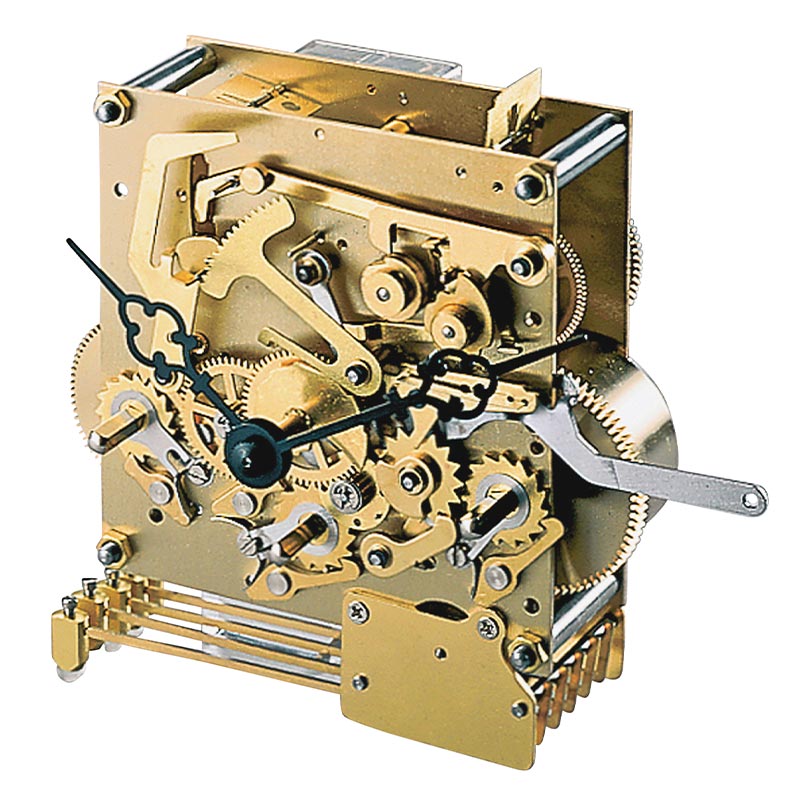
These three melodies are commonly found on higher-grade mechanical mantel clocks, wall clocks, and grandfather clocks. A clock with a triple-chime movement usually allows the owner to choose between these different melodies.
Westminster is the best known.
Whittington has an old English character.
St. Michael has a more American connection.
That makes St. Michael especially appealing to collectors who want something familiar, but not quite as common as Westminster.
Why St. Michael Feels Different
The St. Michael chime has a stately, graceful quality. It feels traditional, but it does not have quite the same everyday familiarity as Westminster.
That can be a good thing.
Many people have heard Westminster so often that they immediately recognize it. St. Michael feels a little more unusual. It has a refined sound, and on the right clock it can give the piece a more distinctive personality.
For collectors, that matters. A chime is not just background sound. It is part of the identity of the clock.
Two clocks can look similar, but if one plays Westminster and the other plays St. Michael, the experience of owning them can feel very different.
Why Clockmakers Used It
Clockmakers used the St. Michael chime because it gave buyers a meaningful alternative to Westminster.
A triple-chime clock feels more luxurious because it gives the owner a choice. Instead of hearing the same melody forever, the owner can change the sound of the clock to suit the room, the season, or simply their own preference.
St. Michael became one of the standard options because it had several things going for it.
It had a historic name.
It had a graceful melody.
It was different from Westminster.
It gave the clock a sense of added character.
And for American buyers, its connection to Charleston gave it a story close to home.
St. Michael vs. Westminster
Westminster is famous because of the Palace of Westminster and Big Ben.
St. Michael is special because of Charleston.
That difference is important.
Westminster feels grand, public, and instantly recognizable. It is the sound most people expect from a traditional chiming clock.
St. Michael feels a little more personal and distinctive. It is still classic, but it is not heard as often. For that reason, many collectors enjoy it because it sets a clock apart.
Neither is better in every case. They simply offer different moods.
Westminster is iconic.
St. Michael is elegant and less common.
Whittington is old-world and distinctive.
Together, they make the triple-chime clock one of the most enjoyable types of mechanical clock to own.
What to Look for in a St. Michael Chime Clock
If you are considering a clock with the St. Michael chime, the most important thing is not just whether the clock has the setting. It is whether the chime works properly.
A good St. Michael chime clock should play clearly at the quarter hours. The hammers should lift and fall correctly. The melody selector should move properly. The hour strike should match the correct hour. If the clock has a silence feature or night shutoff, that should also be tested.
As with any vintage or mechanical clock, condition matters.
A clock may have a wonderful chime system and still need service. That does not make it undesirable, but it does mean the buyer should understand what is working and what may need attention.
Why Collectors Still Love the St. Michael Chime
The St. Michael chime remains loved because it combines sound, history, and character.
It is not just another melody. It is connected to one of America’s great historic church towers, to Charleston’s public timekeeping, and to bells that survived war, travel, damage, recasting, and restoration.
That is a remarkable story for something most people simply hear as a pleasant chime.
For clock collectors, that is the magic.
A mechanical clock is never just a machine. It is history you can hear.
And when a clock plays the St. Michael chime, it carries a little piece of Charleston with it.

Just A Clock Collector