How to Identify and Choose the Correct Replacement Clock Movement
Looking for where to buy a clock movement online? Just A Clock Collector offers genuine replacement mechanical clock movements from Hermle, Kieninger, Urgos, and Regula.
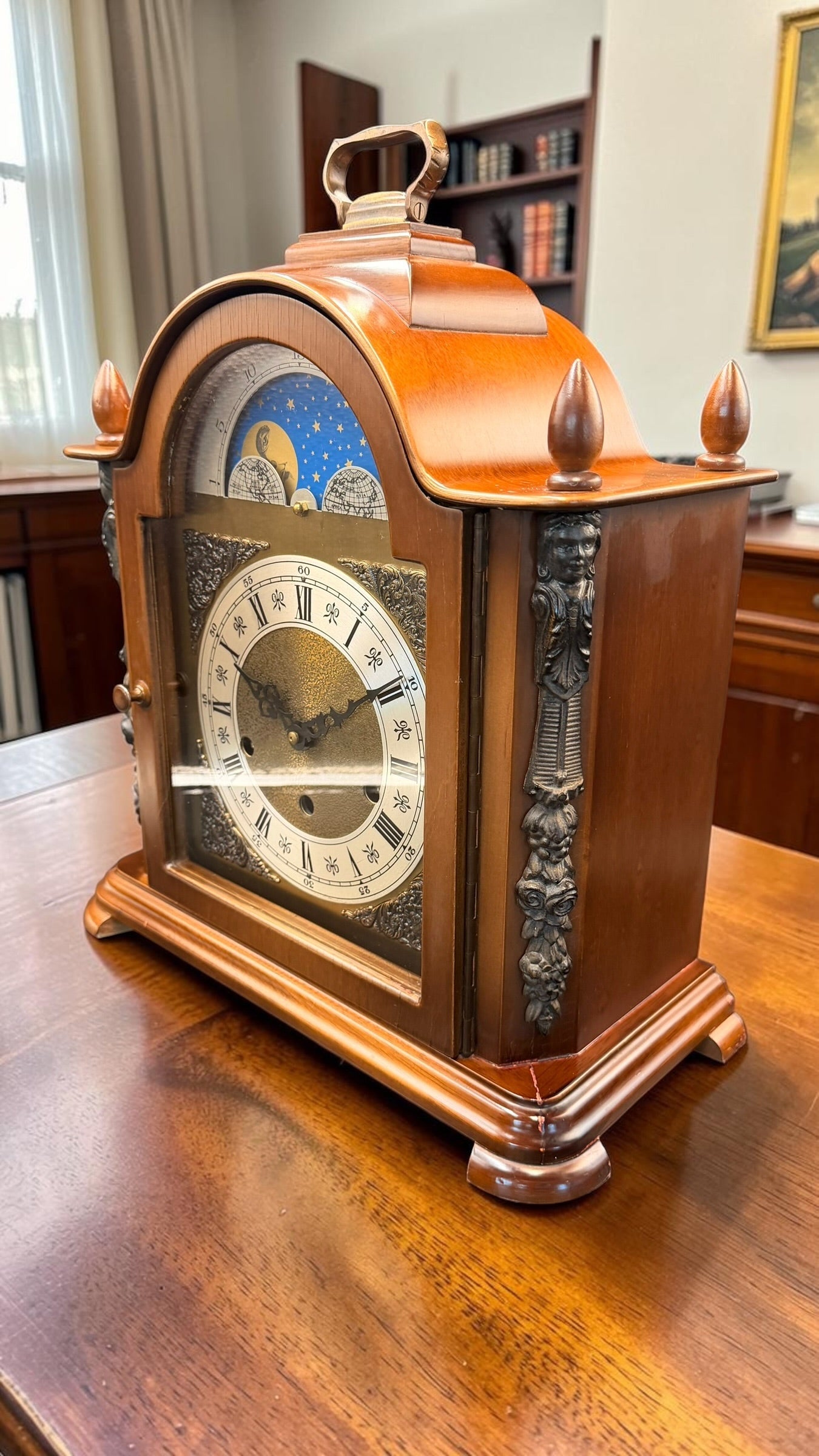
Whether you are restoring a treasured family heirloom, repairing a customer’s clock, or replacing a worn movement in a mantel, wall, grandfather, regulator, bracket, or cuckoo clock, choosing the correct replacement movement can give the clock decades of additional service.
Buying a mechanical clock movement online can feel confusing, especially when movement numbers, pendulum lengths, hand shaft sizes, chime configurations, and discontinued models are involved. We specialize in helping customers identify the correct movement before ordering so they can purchase with confidence.
Where to Buy a Clock Movement Online
Finding the right clock movement is about much more than simply choosing the lowest price. A quality replacement should be a genuine factory movement from a trusted manufacturer, supported by knowledgeable assistance to help ensure compatibility with your clock.
The best place to buy a clock movement online is from a seller that understands mechanical clocks, can help identify the correct replacement, and clearly explains whether the movement is new, rebuilt, used, or a modern substitute for a discontinued model.
At Just A Clock Collector, we specialize in genuine replacement mechanical clock movements from respected manufacturers, including Hermle, Kieninger, Urgos, and Regula.
As an authorized Hermle dealer and authorized Kieninger dealer, we offer authentic factory-new movements backed by manufacturer support and applicable warranty coverage. We also provide replacement solutions for many discontinued Urgos movements and authentic Regula movements for traditional Black Forest cuckoo clocks.
Our goal is not simply to sell you a movement. We want to help make sure you receive the correct movement for your clock the first time.
Why Replace a Clock Movement Instead of the Entire Clock?
Many quality clocks were built with cases designed to last for generations. The wooden case, dial, decorative hardware, weights, pendulum, and other visible components may remain beautiful long after the original movement becomes worn.
Over time, pivots, bushings, gears, mainsprings, and other internal components can develop significant wear. In some situations, repairing the original movement is worthwhile. In others, the labor and parts required to rebuild it may cost as much as or more than a new replacement movement.
Replacing the movement allows you to:
-
Preserve the original clock case
-
Restore reliable timekeeping
-
Retain the clock’s familiar appearance
-
Keep a treasured family heirloom in service
-
Avoid repeated repairs to a heavily worn movement
-
Enjoy decades of dependable operation from a factory-new movement
A replacement movement can often be installed without changing the exterior appearance of the clock. Once installed, the clock retains the case, dial, hands, pendulum, weights, and character that made it special.
How to Identify the Correct Replacement Clock Movement
The most important step before ordering is identifying the movement currently installed in the clock.
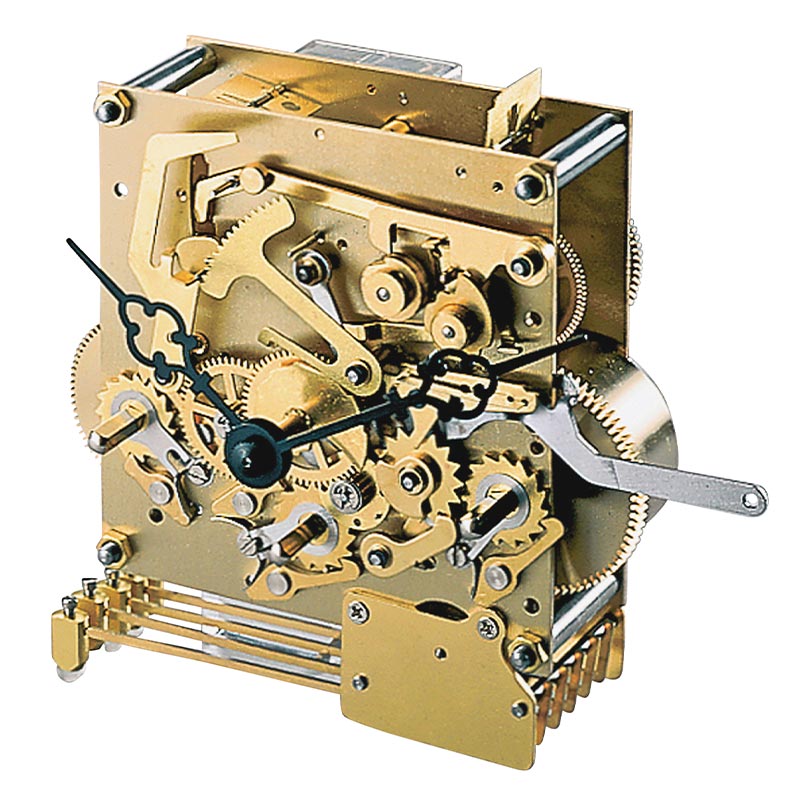
Mechanical clock movements usually have identifying information stamped into the back plate. This information may include the manufacturer’s name, movement series, model number, pendulum length, beat rate, or other specifications.
Look for the following information:
-
Manufacturer name
-
Movement number
-
Pendulum length
-
Plate size
-
Hand shaft length
-
Chime type
-
Hammer arrangement
-
Cable, chain, or spring drive
-
Number of winding points
-
Weight or mainspring configuration
The movement number is typically stamped directly into the brass back plate. Examples may include numbers such as 340-020, 351-030, 451-050, 1161-853, or similar combinations.
Additional numbers may indicate pendulum length, production year, jewel count, or other technical details. Not every number stamped onto the movement is part of the model number, which is one reason movement identification can be confusing.
Clear photographs of the entire back plate and all stamped numbers are extremely helpful when identifying a replacement.
Not sure which movement you need? Use our Clock Movement Finder to identify the correct replacement.
If you are uncertain which movement you need, contact us with photographs of the movement and the numbers stamped into the back plate. We are happy to help determine the correct replacement whenever possible.
Mechanical Clock Movement Manufacturers
We offer replacement movements from several of the most respected names in traditional clockmaking.
Hermle Clock Movements
Hermle has manufactured precision German clock movements for nearly a century and remains one of the world’s best-known mechanical movement manufacturers.
Hermle movements are found in clocks produced by Howard Miller, Ridgeway, Sligh, Emperor, Seth Thomas, Hamilton, Mason & Sullivan, and many other clock companies.
Hermle manufactures movements for:
-
Mantel clocks
-
Wall clocks
-
Bracket clocks
-
Grandfather clocks
-
Floor clocks
-
Regulator clocks
-
Skeleton clocks
-
Triple-chime clocks
-
Westminster chime clocks
-
Time-only clocks
Hermle movements are known for dependable construction, strong parts availability, and excellent value. Many older Hermle movements can be replaced with a current production version of the same movement series.
In some cases, a newly manufactured Hermle movement may have minor design updates compared with the original. These revisions generally improve production, reliability, or compatibility without changing the basic function of the movement.
As an authorized Hermle dealer, Just A Clock Collector offers genuine factory-new Hermle movements with applicable manufacturer warranty coverage.
Kieninger Clock Movements
Founded in 1912, Kieninger is one of the oldest existing manufacturers of mechanical clock movements in the world.
Kieninger movements are known for premium craftsmanship, precision engineering, beautifully finished components, and smooth operation. They are commonly found in high-end grandfather clocks, regulator clocks, mantel clocks, wall clocks, and tubular bell clocks.
Kieninger produces movements for:
-
Grandfather clocks
-
Floor clocks
-
Premium mantel clocks
-
Regulator wall clocks
-
Triple-chime clocks
-
Tubular bell clocks
-
Cable-driven clocks
-
Chain-driven clocks
-
Spring-driven clocks
-
Clocks with platform escapements
Many Kieninger movements are available with different pendulum lengths, hand shaft sizes, chime arrangements, escapements, and drive systems. Identifying the complete model number is especially important before ordering.
As an authorized Kieninger dealer, Just A Clock Collector offers genuine Kieninger movements supplied through official manufacturer channels.
Urgos Clock Movements
Urgos produced mechanical movements used in many grandfather clocks, wall clocks, and mantel clocks throughout the twentieth century.
Original Urgos movements are no longer manufactured under the original product line. However, replacement solutions are available for many discontinued Urgos models.
Depending on the original movement, the correct replacement may be:
-
A compatible Hermle movement
-
A compatible Kieninger movement
-
A modern movement manufactured to replace an older Urgos series
-
A conversion requiring minor adjustments during installation
Urgos movement numbers can be especially confusing because older numbering systems do not always match newer replacement references.
Before ordering a replacement for an Urgos movement, it is important to verify the original model number, pendulum length, chime configuration, drive system, and case dimensions.
We are happy to help identify available replacement options for discontinued Urgos movements whenever possible.
Regula Cuckoo Clock Movements
Regula is one of the most recognized manufacturers of mechanical movements for traditional Black Forest cuckoo clocks.
Regula movements are commonly found in:
-
One-day cuckoo clocks
-
Eight-day cuckoo clocks
-
Musical cuckoo clocks
-
Traditional chalet cuckoo clocks
-
Carved Black Forest cuckoo clocks
Choosing the correct Regula movement involves more than matching the basic model number. The chain length, bellows lift wires, music activation system, hand shaft, pendulum length, and cuckoo configuration may also need to be considered.
A clear photograph of the old movement and its markings can help determine the appropriate replacement.
Types of Replacement Mechanical Clock Movements
Mechanical movements are available in many different styles and configurations.
Mantel Clock Movements
Mantel clock movements are generally spring-driven and are wound with a key through openings in the dial.
Depending on the clock, the movement may include:
-
Time-only operation
-
Hour and half-hour strike
-
Westminster chime
-
Triple chime
-
Balance wheel escapement
-
Pendulum operation
The hand shaft length and winding arbor positions are especially important when replacing a mantel clock movement.
Wall Clock Movements
Wall clock movements may be spring-driven, weight-driven, chain-driven, or cable-driven.
Common wall clock movement styles include:
-
Westminster chime movements
-
Regulator movements
-
Vienna regulator movements
-
Time-only movements
-
Triple-chime movements
-
Weight-driven movements
-
Spring-driven movements
Pendulum length and mounting dimensions must be verified carefully because the movement must fit correctly inside the existing clock case.
Grandfather Clock Movements
Grandfather clock movements are typically weight-driven and use chains or cables to raise and lower the weights.
They may feature:
-
Westminster chime
-
Triple chime
-
Tubular bells
-
Chime rods
-
Cable drive
-
Chain drive
-
Automatic night shutoff
-
Seconds hand
-
Moon dial operation
Grandfather clock movements often have multiple versions that appear similar but use different pendulum lengths, hammer arrangements, weight requirements, or hand shaft lengths.
Matching the full movement number and specifications is essential.
Bracket Clock Movements
Bracket clock movements are usually spring-driven and may be found in traditional German, English-inspired, or American-made clock cases.
They often include:
-
Westminster chime
-
Triple chime
-
Hour strike
-
Quarter-hour chime
-
Balance wheel escapement
-
Pendulum escapement
-
Eight-hammer or more elaborate chime systems
Because bracket clock dials and cases vary widely, the hand shaft length and winding arbor positions should be confirmed before ordering.
Regulator Clock Movements
Regulator clock movements are designed for accurate pendulum timekeeping and may be spring-driven or weight-driven.
They are found in wall regulators, Vienna regulators, schoolhouse clocks, and precision-style clocks.
Important specifications include:
-
Pendulum length
-
Beat rate
-
Drive type
-
Plate size
-
Hand shaft length
-
Strike or chime configuration
Cuckoo Clock Movements
Cuckoo clock movements are generally one-day or eight-day chain-driven movements.
The correct replacement depends on:
-
Movement model
-
Number of chains
-
Music box compatibility
-
Pendulum length
-
Bellows arrangement
-
Cuckoo door operation
-
Hand shaft length
-
Strike configuration
Regula is the leading choice for authentic replacement cuckoo clock movements.
Spring-Driven, Chain-Driven, and Cable-Driven Movements
Understanding how the movement is powered is another important part of choosing the correct replacement.
Spring-Driven Movements
Spring-driven movements store power in coiled mainsprings and are usually wound with a key.
They are commonly used in:
-
Mantel clocks
-
Bracket clocks
-
Wall clocks
-
Table clocks
A spring-driven movement may have one, two, or three winding points, depending on whether it operates the time, strike, and chime trains.
Chain-Driven Movements
Chain-driven movements use hanging weights connected to chains.
They are commonly used in:
-
Grandfather clocks
-
Cuckoo clocks
-
Regulator clocks
-
Weight-driven wall clocks
The chains are pulled to raise the weights, which then provide power as they slowly descend.
Cable-Driven Movements
Cable-driven movements use steel cables wound around drums to raise the clock weights.
They are commonly found in higher-end grandfather clocks and floor clocks.
The weights are raised using a winding crank inserted through the dial. Cable-driven movements often provide a cleaner appearance because the chains are not visible beneath the movement.
Westminster, Triple-Chime, Strike, and Time-Only Movements
Replacement movements are also classified by their sound and chime functions.
Westminster Chime Movements
Westminster movements play the familiar Westminster melody at each quarter hour, followed by the hour strike at the top of the hour.
They are among the most common chiming movements used in mantel, wall, and grandfather clocks.
Triple-Chime Movements
Triple-chime movements usually allow the owner to select between three melodies.
Common selections include:
-
Westminster
-
Whittington
-
St. Michael
Many triple-chime movements also include a silent setting and automatic night shutoff.
Strike-Only Movements
Strike movements do not play a quarter-hour melody. Instead, they may strike once on the half hour and count the hour at the top of the hour.
These are common in traditional mantel clocks and wall clocks.
Time-Only Movements
Time-only movements operate the clock hands without a strike or chime function.
They are commonly used in regulators, skeleton clocks, simple wall clocks, and clocks designed for quiet operation.
Can a Discontinued Clock Movement Be Replaced?
In many cases, yes.
Manufacturers often update or replace movement models over time. Although the exact number stamped on an older movement may no longer be produced, a modern equivalent may be available.
A replacement may fit the original clock with little or no modification. In other cases, small changes may be required, such as:
-
Changing the hand shaft
-
Adjusting the pendulum leader
-
Repositioning chime rods or hammers
-
Using a conversion mount
-
Changing the dial mounting feet
-
Replacing the hands
-
Adjusting weight specifications
Hermle and Kieninger have produced modern replacements for many older movement series. Urgos movements can also often be replaced with compatible current-production movements.
IIf you’re working with a Seth Thomas clock, see our Seth Thomas Clock Movement Replacement Guide for help identifying the movement and determining whether a modern replacement may be available.
Because discontinued movement substitutions can be complicated, customers should avoid ordering based only on a partial movement number or a photograph from another online listing.
Contact us with photographs and identifying information, and we will help determine whether a suitable replacement is available.
Should You Buy a New, Used, or Rebuilt Clock Movement?
Clock movements may be advertised online as new, used, rebuilt, serviced, or reconditioned. These terms do not mean the same thing.
Factory-New Movements
A factory-new movement has not previously been installed and operated in a clock.
Benefits may include:
-
New gears and pivots
-
New bushings and bearings
-
New mainsprings or drive components
-
Manufacturer-supported quality
-
Applicable warranty coverage
-
Decades of potential service with proper care
For many clocks, a factory-new movement provides the most dependable long-term solution.
Used Movements
A used movement may have unknown wear, an unknown maintenance history, or problems that are not immediately visible.
Even when a used movement runs during testing, it may contain worn pivots, elongated bushings, weak mainsprings, damaged gears, or old lubricants.
A used movement may be appropriate for a restoration requiring original parts, but it is generally less predictable than a factory-new replacement.
Rebuilt or Reconditioned Movements
A properly rebuilt movement can provide excellent service when the work is performed by an experienced clockmaker.
However, the terms “rebuilt” and “reconditioned” are sometimes used loosely. Buyers should ask what work was actually completed.
A thorough rebuild may include:
-
Complete disassembly
-
Ultrasonic or professional cleaning
-
Pivot polishing
-
Bushing replacement
-
Mainspring inspection or replacement
-
Gear and pinion inspection
-
Reassembly
-
Lubrication
-
Testing and adjustment
Simply cleaning and oiling a worn movement does not make it fully rebuilt.
Why the Lowest Price Is Not Always the Best Choice
Clock movements are precision mechanical devices. Purchasing the cheapest listing available can become expensive if the movement is incorrect, used, incomplete, damaged, or unsupported.
Before buying, consider:
-
Is the movement genuinely factory-new?
-
Is the seller familiar with mechanical clocks?
-
Can the seller help verify compatibility?
-
Is the full movement number clearly identified?
-
Is warranty coverage available?
-
Are photographs and specifications accurate?
-
Will the movement be packed carefully?
-
Is assistance available after the sale?
The correct movement purchased from a knowledgeable supplier is usually a better value than an inexpensive movement that cannot be installed or does not operate correctly in the clock.
Why Buy a Clock Movement from Just A Clock Collector?
Just A Clock Collector is not a general parts warehouse. We specialize in clocks, clock movements, and helping customers keep quality mechanical clocks in service.
We proudly offer:
-
Genuine factory-new clock movements
-
Authorized Hermle dealer support
-
Authorized Kieninger dealer support
-
Replacement options for many discontinued Urgos movements
-
Authentic Regula cuckoo clock movements
-
Assistance identifying movement numbers
-
Knowledgeable customer support
-
Carefully packed shipments
-
Support before and after the purchase
Customers frequently contact us after becoming overwhelmed by movement numbers, conflicting online information, or uncertainty about which model fits their clock.
We understand that many of these clocks are valuable family heirlooms with tremendous sentimental importance. We take the time to help customers understand their options and select the correct replacement whenever possible.
What Information Should You Send for Movement Identification?
For the best chance of identifying your movement correctly, send:
-
A clear photograph of the entire back plate
-
Close-up photographs of all stamped numbers
-
A photograph of the front dial
-
A photograph of the entire clock
-
The approximate case height
-
The pendulum length
-
The number of weights or winding holes
-
The chime melody, if known
-
Photographs of the hammer and chime rod arrangement
Do not remove the movement from the clock simply to take a photograph unless you are comfortable doing so. In many cases, a clear picture through the rear access door is sufficient.
The more information you provide, the easier it is to identify the correct replacement.
Frequently Asked Questions About Replacement Clock Movements
Can I install a replacement clock movement myself?
Some experienced clock owners install their own replacement movements, especially when the new movement is a direct replacement.
However, mechanical movements contain delicate components and must be installed, adjusted, leveled, and synchronized correctly. If you are uncomfortable working with mechanical clocks, installation by a qualified clock repair professional is recommended.
Does a new movement include the pendulum, weights, hands, or chime rods?
Most replacement movements are sold as the movement itself and may not include the pendulum, weights, hands, dial, chime rods, winding key, or mounting hardware.
Included components vary by manufacturer and model. Review the product description carefully before ordering.
Can I reuse my existing clock hands?
Often, yes, but compatibility depends on the hand shaft size and design of the replacement movement.
Some replacement movements require new hands or minor adjustment to the original hands.
Can I reuse my existing pendulum?
In many cases, the original pendulum can be reused if the new movement is designed for the same pendulum length.
The pendulum length stamped on a movement is generally measured according to the manufacturer’s specifications and may not equal the length of the visible pendulum alone.
Can I reuse my existing weights?
Sometimes. Replacement movements may require specific weight sizes for the time, chime, and strike trains.
Using weights that are too light can prevent proper operation. Weights that are unnecessarily heavy can increase wear.
Are replacement clock movements already oiled?
Factory-new mechanical movements normally arrive lubricated and ready for installation. Additional oil should not be applied unless specifically required by the manufacturer or installer.
Too much oil can attract dust and cause future problems.
How long will a new mechanical clock movement last?
With proper installation, periodic maintenance, and appropriate lubrication, a quality German mechanical movement can provide decades of service.
Actual lifespan depends on operating conditions, maintenance, movement design, and how frequently the clock is allowed to run.
How often should a mechanical clock movement be serviced?
Service intervals vary, but mechanical clocks should be inspected periodically and professionally cleaned and lubricated when needed.
Waiting until the movement stops completely can allow avoidable wear to accumulate.
Do replacement movements come with a warranty?
Warranty coverage depends on the manufacturer and specific product.
Factory warranties generally cover manufacturing defects but may not cover improper installation, shipping damage after delivery, incorrect adjustments, misuse, or damage caused by incompatible components.
What if my movement number is no longer available?
A current replacement or conversion may still be available.
Send us the full movement number and clear photographs. We will help research the appropriate replacement whenever possible.
Shop Replacement Clock Movements Online
Whether you are restoring a treasured family clock, repairing a customer’s clock, or replacing a movement that has reached the end of its service life, Just A Clock Collector is here to help.
We offer genuine replacement mechanical clock movements from Hermle, Kieninger, Urgos, and Regula, including movements for mantel clocks, wall clocks, grandfather clocks, regulator clocks, bracket clocks, and cuckoo clocks.
With knowledgeable assistance, genuine products, and a passion for traditional clockmaking, Just A Clock Collector is proud to be a trusted source for customers looking to buy replacement clock movements online.
Browse our available movement collections:
Not sure which movement you need? Contact us with clear photographs of your movement and the numbers stamped into its back plate. We will be happy to help identify the correct replacement and bring your clock back to life.
We invite you to explore our collection and let us help bring your favorite clock back to life.
Once you have identified the movement series and specifications, you can shop replacement clock movements from Hermle, Kieninger, Urgos and Regula or contact Just A Clock Collector for identification assistance.

Just A Clock Collector