Can a battery-powered quartz clock really be vintage?
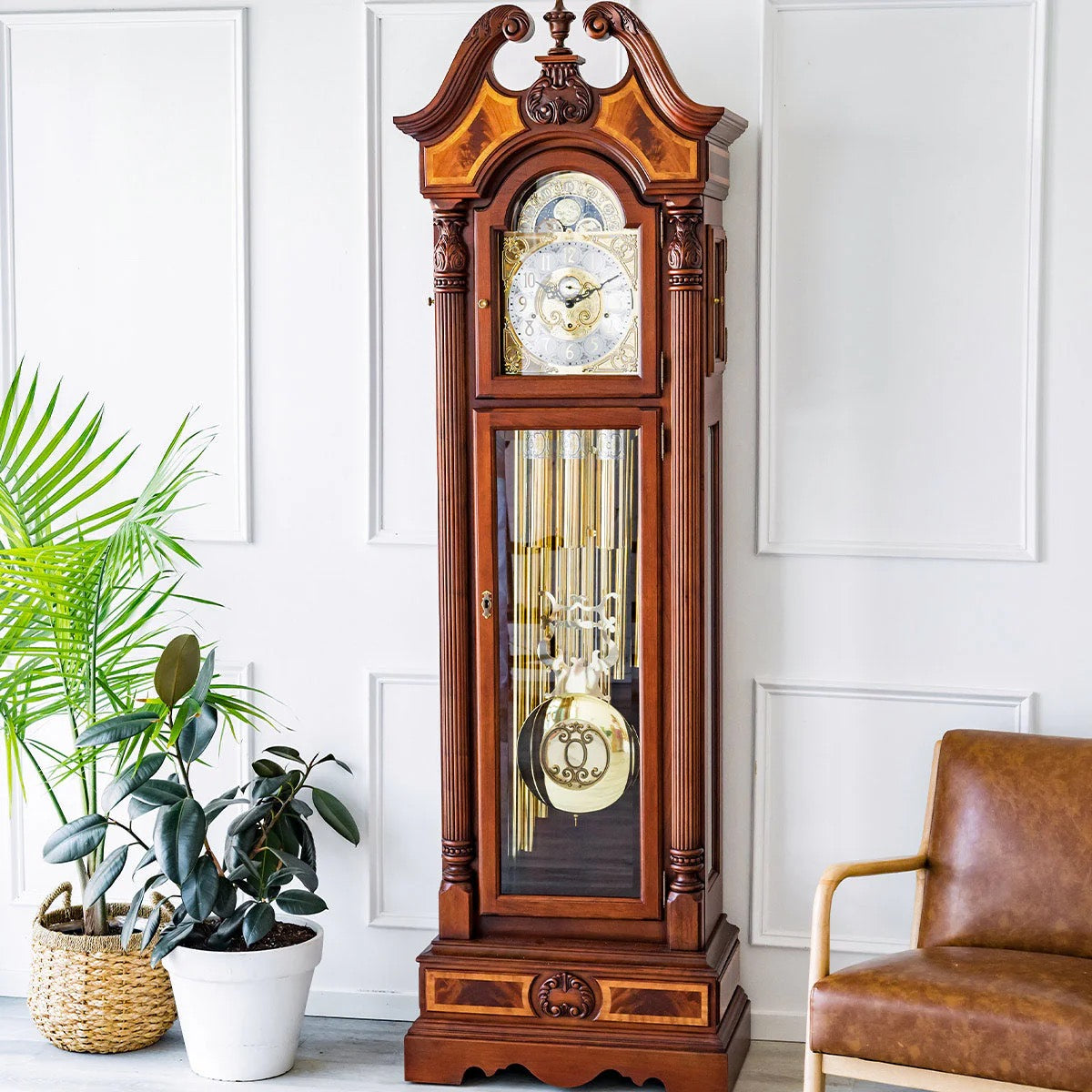
When people hear the phrase “vintage clock,” they often picture a key-wound mantel clock, a grandfather clock with weights and a pendulum, or an old wall clock with a mechanical movement.
But what about quartz clocks?
Can a battery-powered clock really be considered vintage?
The answer is yes.
A quartz clock can absolutely be vintage. But that does not mean every old quartz clock is collectible, valuable, or special.
That distinction matters.
What Does “Vintage” Actually Mean?
In the antiques and collecting world, “vintage” usually refers to an item that is old enough to represent a past era, but not old enough to be considered antique.
Antique is often used for pieces around 100 years old or older.
Vintage is commonly used for items that are at least a few decades old and clearly reflect the style, design, or manufacturing period in which they were made.
By that standard, many quartz clocks from the 1970s, 1980s, 1990s, and even early 2000s can now be considered vintage.
That may feel strange because quartz clocks still seem modern to many people. But the early quartz era is no longer new. It is now part of clock history.
Quartz Was a Major Shift in Timekeeping
Quartz clocks changed the clock world.
Before quartz became common, most household clocks were mechanical or electric. Mechanical clocks needed winding. Some electric clocks depended on being plugged into the wall. Quartz movements offered something different: reliable accuracy, battery power, and much less maintenance.
For everyday buyers, that was a huge advantage.
A quartz clock could keep excellent time without weekly winding, complicated adjustment, or regular mechanical attention. That made accurate timekeeping easier for ordinary homes, offices, schools, and businesses.
Collectors may prefer mechanical clocks for their craftsmanship, but quartz clocks still deserve a place in the history of timekeeping. They represent the period when precision became affordable and convenient.
Vintage Does Not Always Mean Mechanical
This is where some confusion comes in.
Some people use “vintage clock” as if it automatically means mechanical. But that is not really correct.
Vintage describes age, period, style, and historical character. It does not describe the type of movement.
A clock can be vintage and mechanical.
A clock can be vintage and electric.
A clock can be vintage and quartz.
The movement matters, of course, but it is not the only thing that determines whether a clock is vintage.
So What Makes a Quartz Clock Worth Owning?
Not all quartz clocks are created equal.
A plain plastic battery wall clock from the 1990s may technically be old enough to be vintage, but that does not automatically make it desirable. Age alone is not enough.
A quartz clock becomes more interesting when it has other qualities.
A respected maker.
A high-quality case.
A distinctive design.
A desirable period look.
Good materials.
Original condition.
Collector appeal.
A brand or model people recognize.
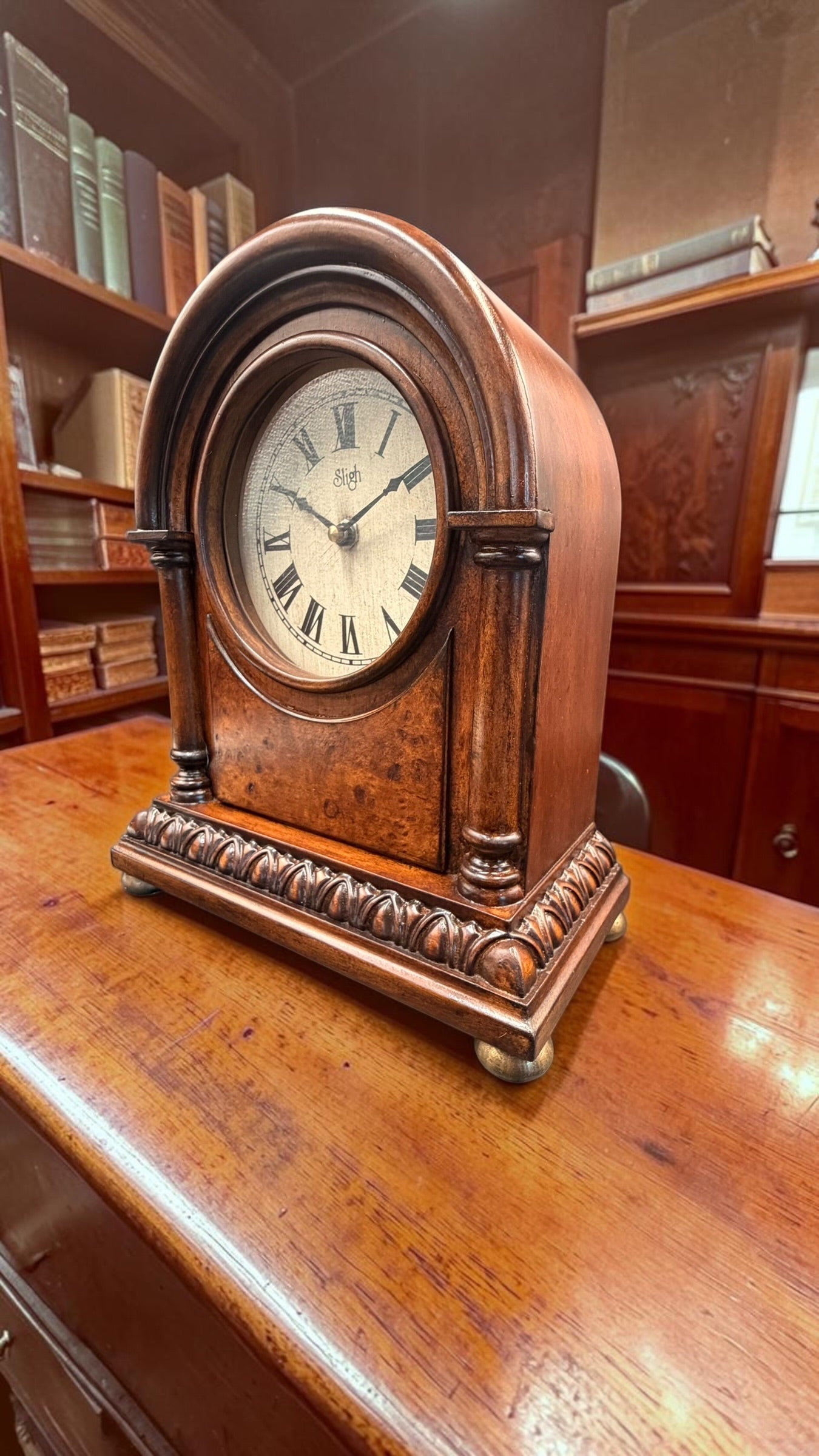
This is why some quartz clocks from companies like Howard Miller, Seiko, Seth Thomas, Bulova, Sligh, and others can still be worth owning. The movement may be simple, but the clock itself may have design, quality, or brand appeal.
Quartz Clocks and Period Style
One of the best reasons to appreciate vintage quartz clocks is design.
Quartz clocks often reflect the style of the decade in which they were made.
A 1970s quartz clock may have a warm wood case, brass details, or a bold mid-century look.
An 1980s clock may have a formal traditional case, glass panels, gold-tone accents, or a decorative dial.
A 1990s clock may reflect the home décor style of that period, including oak finishes, tambour shapes, schoolhouse designs, or wall clocks with nostalgic details.
These clocks are not always valuable because of the movement. They are often valuable because they capture a certain look and feeling.
For many buyers, that is enough.
Mechanical vs. Quartz: A Fair Comparison
A vintage quartz clock should not be described as if it has the same mechanical appeal as an 8-day key-wound movement.
They are different categories.
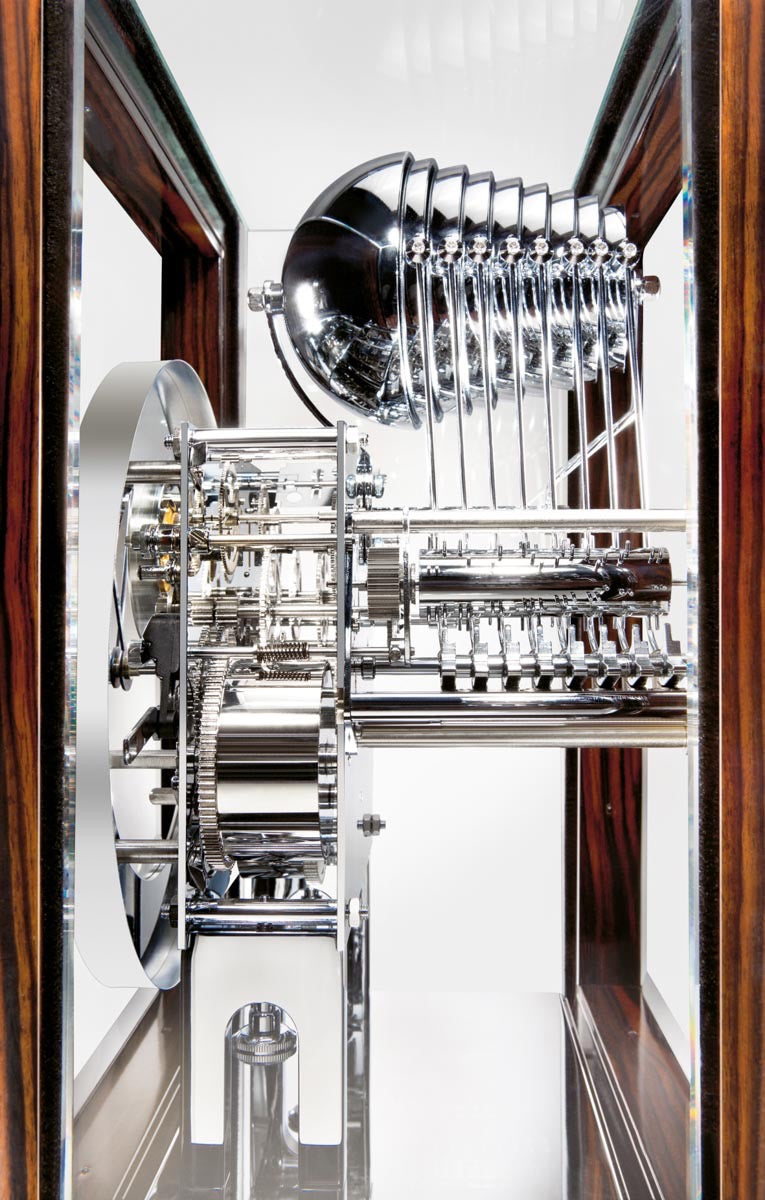
A mechanical clock has gears, springs, hammers, chime trains, pendulums, weights, or other moving parts that require more craftsmanship and service. That is part of the romance and collector value.
A quartz clock is usually simpler, more accurate, and easier to live with. It may not offer the same mechanical experience, but it can still be attractive, useful, and historically interesting.
Mechanical clocks appeal to people who love the machinery.
Quartz clocks often appeal to people who love the look, convenience, brand, or period style.
Both can have a place in a clock collection.
A Note About Quartz Chime Sound
One area where quartz clocks usually do not compare to traditional mechanical clocks is the chime sound.
Many quartz clocks can play Westminster, Ave Maria, Bim-Bam, or other melodies, and some of them are very pleasant. They can be convenient, reliable, and easy to enjoy. But the sound is usually produced electronically through a speaker, not by real hammers striking rods, bells, or gongs.
That makes a difference.
A mechanical chime clock has a physical sound. You hear the movement lifting the hammers, the strike against the rods or bells, and the resonance of the clock case itself. That gives mechanical chiming clocks a warmth and presence that quartz chime clocks usually cannot fully duplicate.
That does not make quartz chime clocks bad. For many homes, they are a practical and enjoyable choice. They are easy to live with, often more affordable, and usually require much less maintenance.
But for buyers who are looking for the rich, traditional sound of rods, bells, or a mechanical strike system, a quartz chime will usually feel different.
The fairest way to say it is this: a vintage quartz clock can absolutely be charming and worth owning, but an electronic chime is not the same experience as a true mechanical chime.
When a Quartz Clock Is Not Worth Much
It is also important to be honest.
Many quartz clocks are not especially valuable.
A clock is not collectible just because it takes a battery. It is not automatically desirable just because it is 30 or 40 years old. And if the case is cheap, damaged, generic, or unattractive, the value may be limited.
The same is true with many mechanical clocks, too. Age alone does not guarantee quality.
For quartz clocks, the buyer should look beyond the movement and ask:
Is the case well made?
Is the design attractive?
Is the brand desirable?
Is it clean and presentable?
Does it work properly?
Does it fit a style people still want in their home?
If the answer is yes, the clock may have real appeal.
Why Some Collectors Overlook Quartz
Some clock collectors dismiss quartz clocks because they are not mechanical. That is understandable, especially for collectors who love traditional horology.
But overlooking all quartz clocks is too broad.
Quartz clocks tell an important part of the story. They represent a major change in how people kept time at home. They also represent decades of design, from mid-century modern to traditional American home décor.
A good vintage quartz clock may not impress a mechanical purist, but it can still be a beautiful and useful piece.
And for many customers, that is exactly what they want.
They want a good-looking clock that keeps time, fits their home, and does not require winding or service.
How I Think About Vintage Quartz Clocks
The fairest way to describe a quartz clock is with honesty.
If it is quartz, say it is quartz.
If it is vintage, say it is vintage.
If it is not mechanical, do not imply that it is.
A vintage quartz clock can be a wonderful piece when it is described clearly. Buyers appreciate knowing what they are getting. Some shoppers specifically prefer quartz because it is easier to maintain.
That does not make the clock less real.
It simply makes it different.
The Bottom Line
So, can quartz clocks really be considered vintage?
Yes.
Quartz clocks from earlier decades can absolutely be vintage. They may represent a specific era, a recognizable design style, a respected brand, or a meaningful shift in timekeeping history.
But vintage does not automatically mean valuable.
The best vintage quartz clocks are desirable because of the total package: design, condition, brand, materials, usefulness, and charm.
A key-wound mechanical clock may offer more traditional collector appeal.
A vintage quartz clock may offer style, accuracy, convenience, and nostalgia.
A mechanical clock may offer more traditional craftsmanship, richer physical sound, and stronger collector appeal.
Both can be worth owning.
The important thing is knowing the difference.

Just A Clock Collector