Kieninger Clocks Explained | German Clockmaking & Mechanical Movements
Kieninger Clocks Explained | German Clockmaking & Mechanical Movements
Kieninger is one of the most respected names in German clockmaking. For clock collectors, decorators, and buyers who appreciate traditional mechanical clocks, the Kieninger name carries a strong reputation for precision, craftsmanship, and elegant design.
While many people are familiar with clock brands such as Hermle, Howard Miller, Sligh, and Seth Thomas, Kieninger holds a special place in the clock world because of its long association with high-quality German mechanical movements. Kieninger movements have been used in many fine clocks over the years, including premium mantel clocks, wall clocks, floor clocks, regulators, and bracket-style clocks.
What is Kieninger?
Kieninger is a German clockmaker known for mechanical clock movements and finished clocks. The company is especially respected for traditional key-wound, weight-driven, and cable-driven mechanical movements used in higher-quality clocks.
For many buyers, the movement inside a clock is just as important as the case on the outside. The movement is the engine of the clock. It controls the timekeeping, chime sequence, strike, pendulum action, and overall mechanical function. Kieninger has long been associated with quality movements found in both Kieninger-branded clocks and clocks sold by other respected clock companies.
Why are Kieninger movements respected?
Kieninger movements are valued because they represent traditional German mechanical clockmaking. Many Kieninger movements were built for clocks with features such as Westminster chimes, triple chime selections, moon phase dials, pendulums, cable drive systems, and premium mechanical construction.
Collectors often pay close attention to whether a clock has a Kieninger movement because it can indicate a higher-grade mechanical clock. In some cases, a clock may carry one brand name on the dial or case, while the movement inside was made by Kieninger. This is common in the clock world, especially with many vintage and collectible mechanical clocks.
Kieninger clocks vs Kieninger movements
There is an important difference between a Kieninger clock and a Kieninger movement.
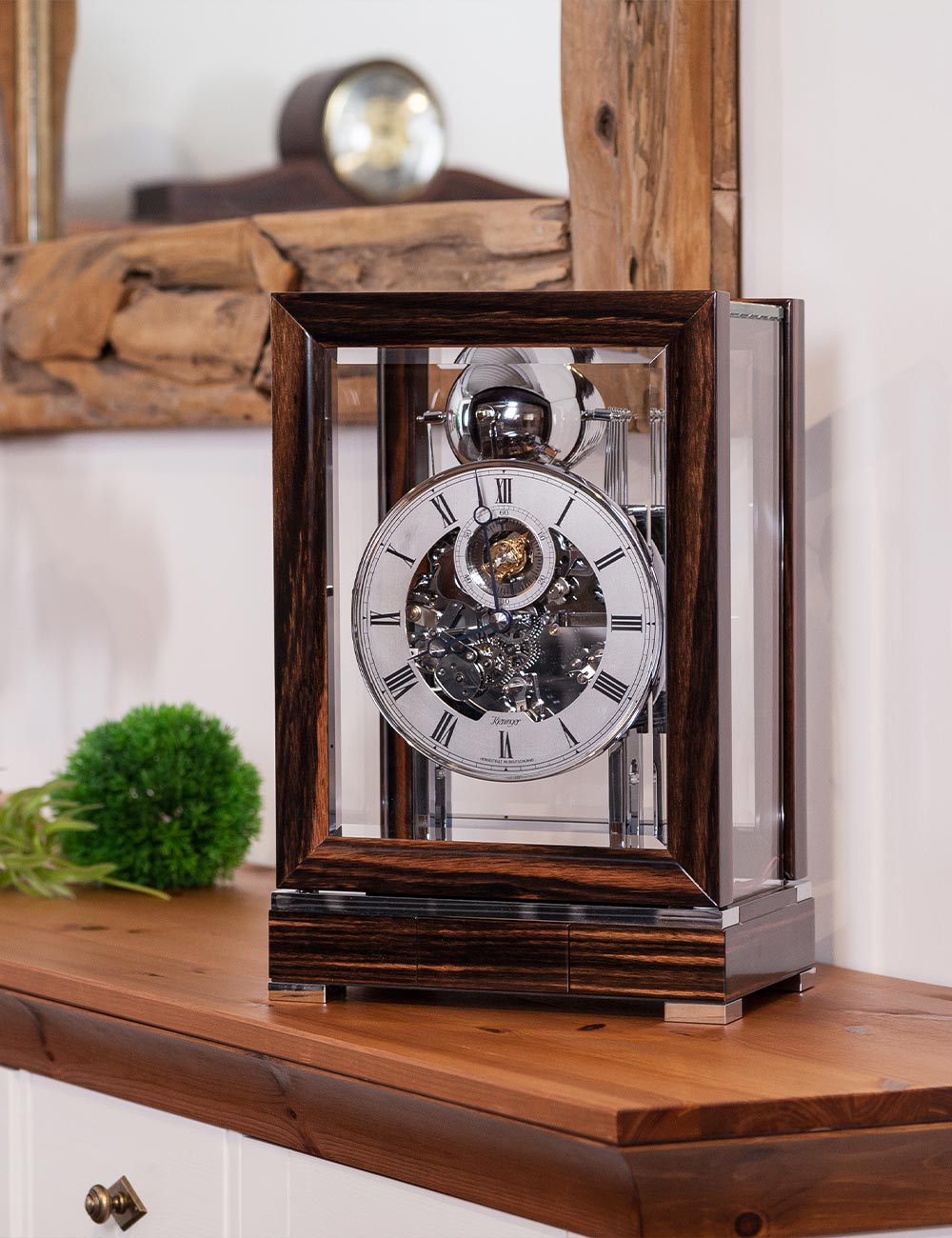
A Kieninger clock is a finished clock sold under the Kieninger name. These may include table clocks, wall clocks, and floor clocks with elegant case designs and mechanical movements.
A Kieninger movement is the mechanical engine inside a clock. These movements may appear in Kieninger clocks, but they may also be found in clocks from other respected brands.
This is one reason Kieninger is so important to collectors. Even when the name on the outside of the clock is not Kieninger, the movement inside may still be a Kieninger movement.
Types of Kieninger clocks
Kieninger has produced a variety of traditional clock styles, including:
Kieninger table clocks
Kieninger table clocks are often chosen by buyers who want a refined mechanical clock in a smaller footprint. These clocks can work beautifully on a mantel, desk, shelf, console table, or sideboard. Many table clocks appeal to collectors because they combine traditional mechanical operation with display-friendly sizing.
Kieninger wall clocks
Kieninger wall clocks often appeal to buyers who want German clockmaking in a practical and decorative form. A mechanical wall clock can become a focal point in a room while also offering traditional pendulum motion and chime features.
Kieninger floor clocks
Kieninger floor clocks are larger statement pieces. These clocks are often chosen for formal rooms, entryways, offices, dining rooms, and collector spaces. Depending on the model, a Kieninger floor clock may include a pendulum, weights, cable-driven movement, chimes, moon phase dial, and premium case design.
Why collectors like Kieninger clocks
Collectors appreciate Kieninger clocks for several reasons. The name is closely connected with German mechanical clockmaking, and many Kieninger movements are known for their quality and refinement. Kieninger clocks also tend to have a more premium, traditional feel compared with many mass-market decorative clocks.
For collectors, the appeal often comes from the combination of movement quality, sound, case design, mechanical complexity, and long-term collectibility. A well-kept Kieninger clock can be both functional and beautiful.
Kieninger and Howard Miller clocks
Many buyers first encounter the Kieninger name when researching Howard Miller clocks. Some higher-quality Howard Miller mechanical clocks used German movements made by companies such as Kieninger or Hermle.
This does not make the clock any less of a Howard Miller. Instead, it shows how many clock brands relied on specialist German movement makers for the mechanical heart of the clock. For collectors, a Howard Miller clock with a Kieninger movement can be very desirable, especially when the case, dial, chime features, and condition are strong.
Kieninger vs Hermle
Kieninger and Hermle are both respected German names in the clock world, but they are not identical. Hermle is widely known for both finished clocks and replacement mechanical movements, and many buyers recognize Hermle because of its broad availability and long-standing presence in new clocks.
Kieninger is often viewed as a premium German movement maker and clockmaker, especially among collectors who pay close attention to the movement inside the clock. Both names are respected, and the better choice depends on the specific clock, movement, features, condition, and buyer preference.
What should you look for when buying a Kieninger clock?
Before buying a Kieninger clock or a clock with a Kieninger movement, look closely at the details. Important things to consider include:
Model number
Movement number
Clock type
Mechanical or quartz operation
Chime type
Pendulum and weights
Cable or chain drive
Moon phase dial
Condition of the case
Whether the clock has been tested
Whether the clock has been serviced
Included key, crank, pendulum, weights, or paperwork
Shipping method and packing quality
For vintage mechanical clocks, condition matters. Even a high-quality movement can need service over time. A clock that has been properly handled, tested, packed, and described gives the buyer more confidence.
Are Kieninger clocks good gifts?
A Kieninger clock can make an excellent gift for someone who appreciates traditional design, German craftsmanship, mechanical clocks, or heirloom-quality pieces. Table clocks and wall clocks can be especially gift-friendly because they are easier to place in a home. Floor clocks make a larger statement and are often chosen for major occasions, formal spaces, or long-term family pieces.
When buying a mechanical clock as a gift, it is important to understand that these are not ordinary battery-operated decor pieces. Mechanical clocks may require setup, leveling, winding, and occasional maintenance. For the right person, that is part of the charm.
Final thoughts
Kieninger is an important name in the world of mechanical clocks. Whether you are looking at a finished Kieninger clock or a vintage clock with a Kieninger movement inside, the name is associated with German clockmaking, mechanical quality, and collectible appeal.
For buyers who care about what is inside the clock, Kieninger deserves attention. The movement is the heart of the clock, and Kieninger has earned respect among collectors, repairers, and clock enthusiasts for producing movements and clocks that reflect traditional craftsmanship.
At Just a Clock Collector, we offer new Kieninger clocks as an authorized Kieninger seller, along with carefully selected vintage and collectible clocks from respected makers such as Hermle, Howard Miller, Seth Thomas, Sligh, Comitti, Stickley, New England Clock Co., and others.

Just A Clock Collector