Weight-Driven vs. Spring-Driven Clocks: What’s the Difference?
Some of the most beautiful mechanical clocks are powered by either weights or springs. Both methods have been used for generations, and both can provide the charm, sound, and craftsmanship that make traditional clocks so special.
But what is the difference between a weight-driven clock and a spring-driven clock?
Weight-Driven Clocks
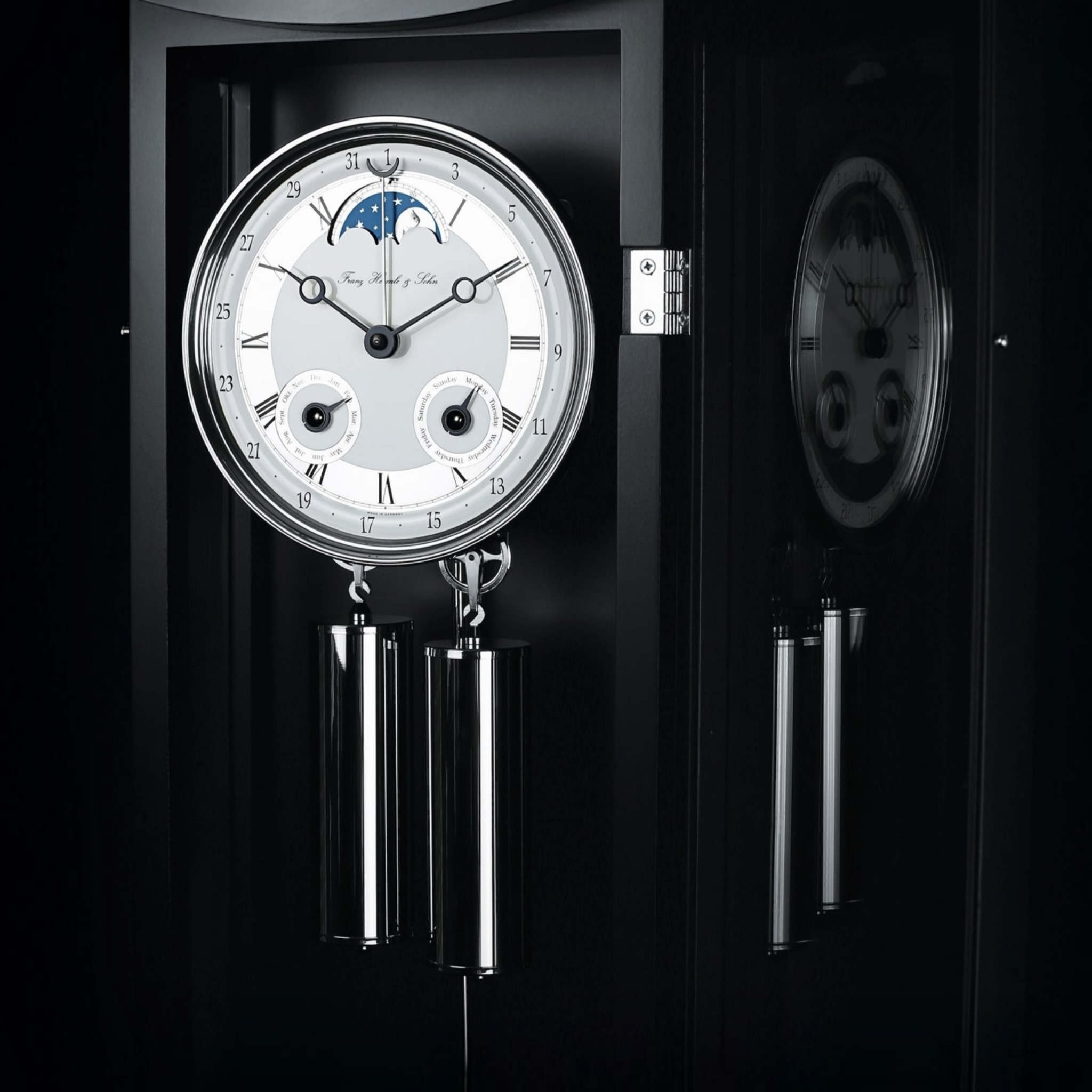
A weight-driven clock uses hanging weights to power the movement. As the weights slowly descend, they release energy that keeps the clock running and, in many cases, powers the chime or strike.
You will often see weight-driven movements in grandfather clocks, regulator wall clocks, Vienna-style wall clocks, and some larger mechanical wall clocks.
The weights are not just decorative. Each one usually has a specific job. One weight may power the timekeeping, another may power the chime, and another may power the hour strike.
Weight-driven clocks often have a very traditional feel. The visible weights and pendulum give the clock a sense of motion, presence, and old-world craftsmanship. For many collectors, this is part of the appeal.
Spring-Driven Clocks
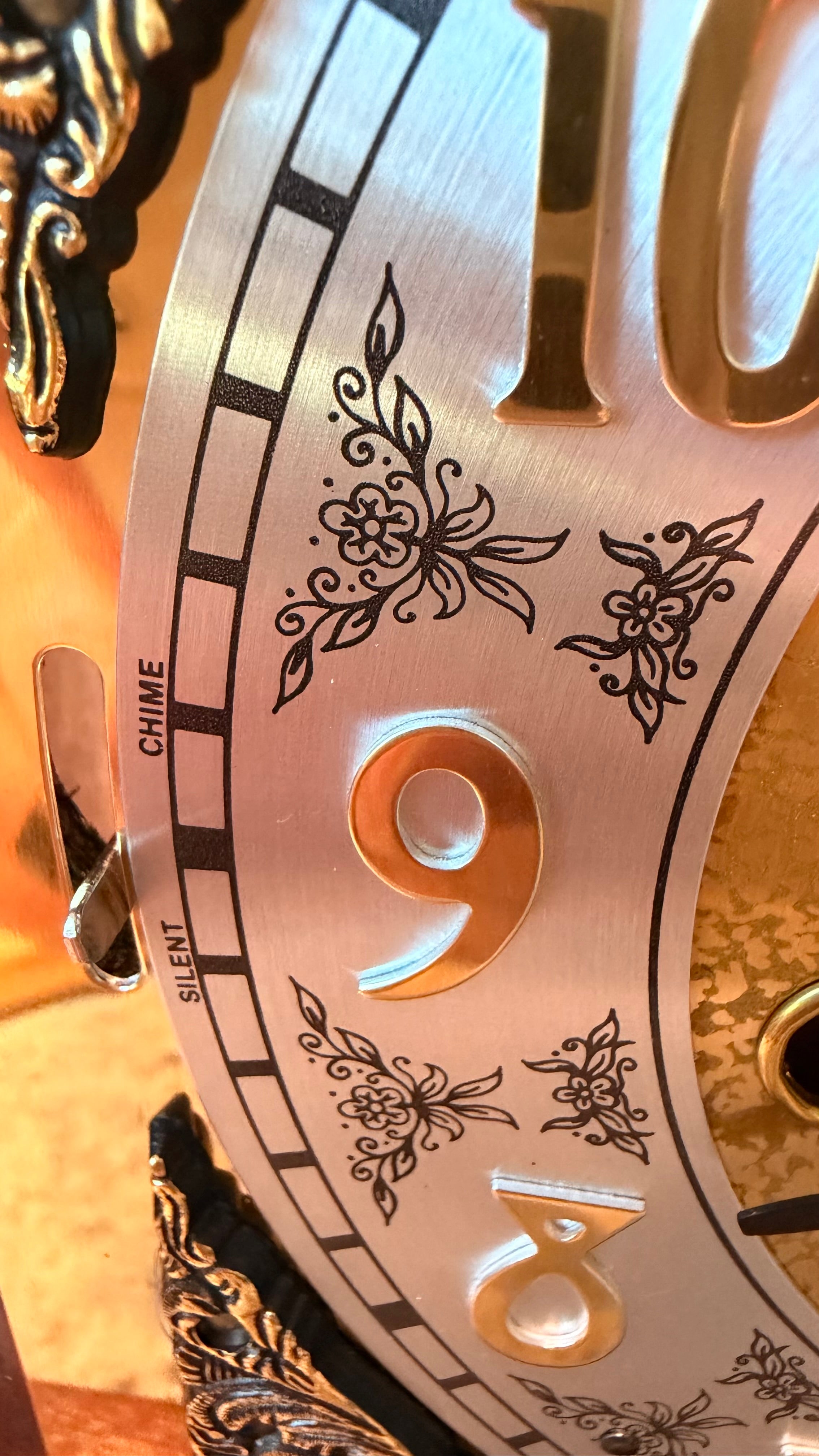
A spring-driven clock uses a wound mainspring to power the movement. Instead of pulling a weight upward, you wind the clock with a key. As the spring slowly unwinds, it releases energy into the movement.
Spring-driven movements are commonly found in mantel clocks, bracket clocks, table clocks, and some wall clocks.
These clocks are often easier to place because they do not need the vertical space required for hanging weights. That makes them ideal for mantels, shelves, desks, bookcases, and smaller spaces.
Many spring-driven clocks still offer the same wonderful features people love in mechanical clocks, including Westminster chimes, bim-bam strikes, passing bell strikes, or other traditional sounds depending on the movement.
Which One Is Better?
Neither is better. They are simply different.
A weight-driven clock often feels more architectural and dramatic. It usually has more visible movement and can become a major focal point in a room.
A spring-driven clock is often more compact and versatile. It gives you the experience of a traditional mechanical clock without needing the height or wall space required by a weight-driven design.
For many clock lovers, the choice comes down to where the clock will live.
A grandfather clock or regulator wall clock can anchor a room. A mantel or bracket clock can add warmth, sound, and character to a fireplace mantel, office, entry table, or bookcase.
Mechanical Clocks Have Character
Whether powered by weights or springs, mechanical clocks have something modern clocks often lack: personality.
They need to be wound. They have moving parts. They make sound. They become part of the rhythm of a home.
That is what makes them special.
At Just A Clock Collector, we appreciate both styles. Some buyers love the stately presence of a weight-driven clock. Others prefer the charm and convenience of a spring-driven mantel clock. Either way, both represent a beautiful tradition of mechanical timekeeping.
Final Thought
When choosing between a weight-driven and spring-driven clock, think less about which one is better and more about what fits your space, your style, and the kind of clock experience you want.
A weight-driven clock makes a statement.
A spring-driven clock brings traditional mechanical charm in a smaller package.
Both are timeless.

Just A Clock Collector