Are Clocks Making a Comeback? Why They Never Should Have Left
Come on, people. Clocks mesmerize me.
Not because I have trouble finding out what time it is. The time is on my phone, computer, car dashboard, oven, microwave, television, and probably three other things within arm’s reach.
That is exactly the problem.
Time is everywhere, but clocks are disappearing.
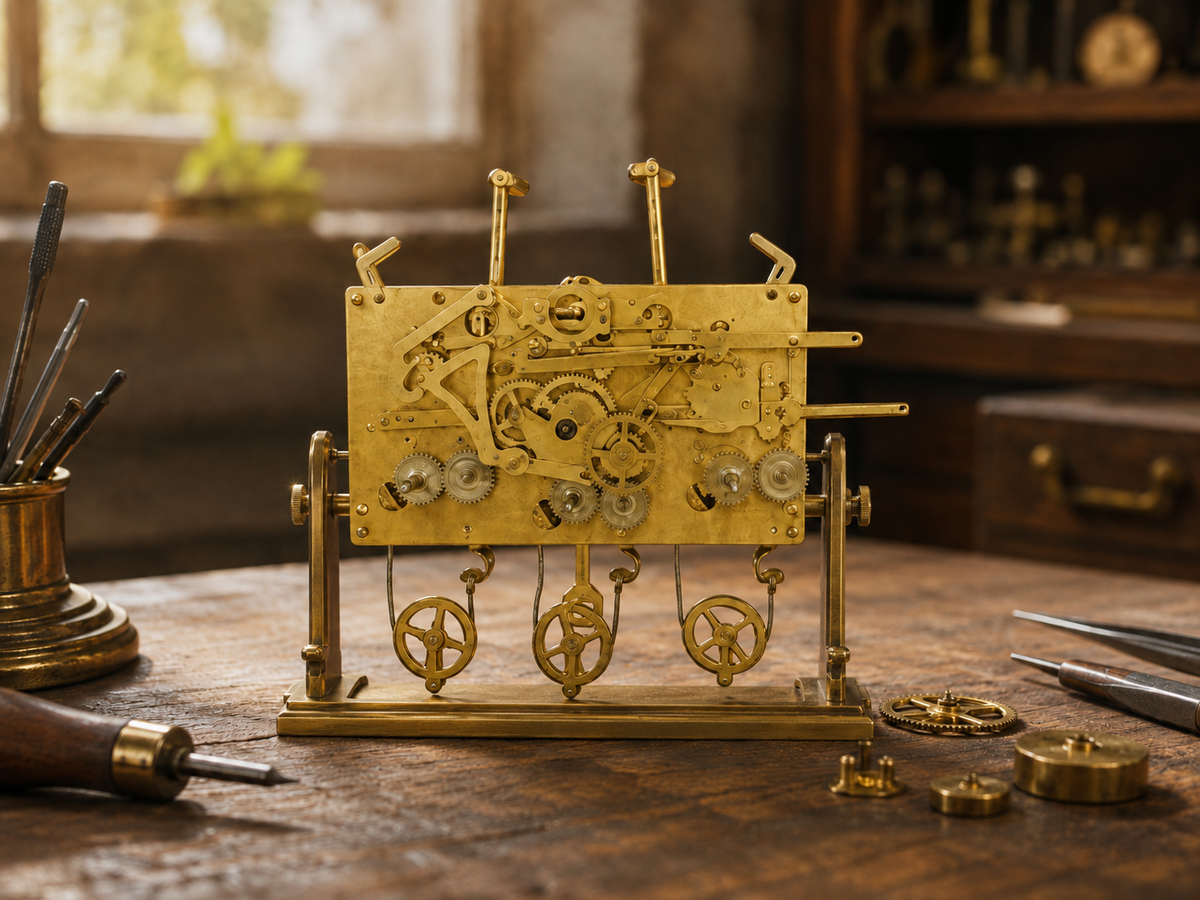
A phone gives me a number. A real clock gives time a face, a rhythm, and a presence. A pendulum swings. An escapement ticks. Gears turn. Hands travel. A chime rolls through the room and reminds you—not urgently and not with another notification—that another hour has passed.
None of that is necessary.
That is what makes it wonderful.
My Clocks Were Family Before They Were a Collection
My fascination with clocks did not begin with a business, a website, or even the idea of becoming a collector.
It began with family.
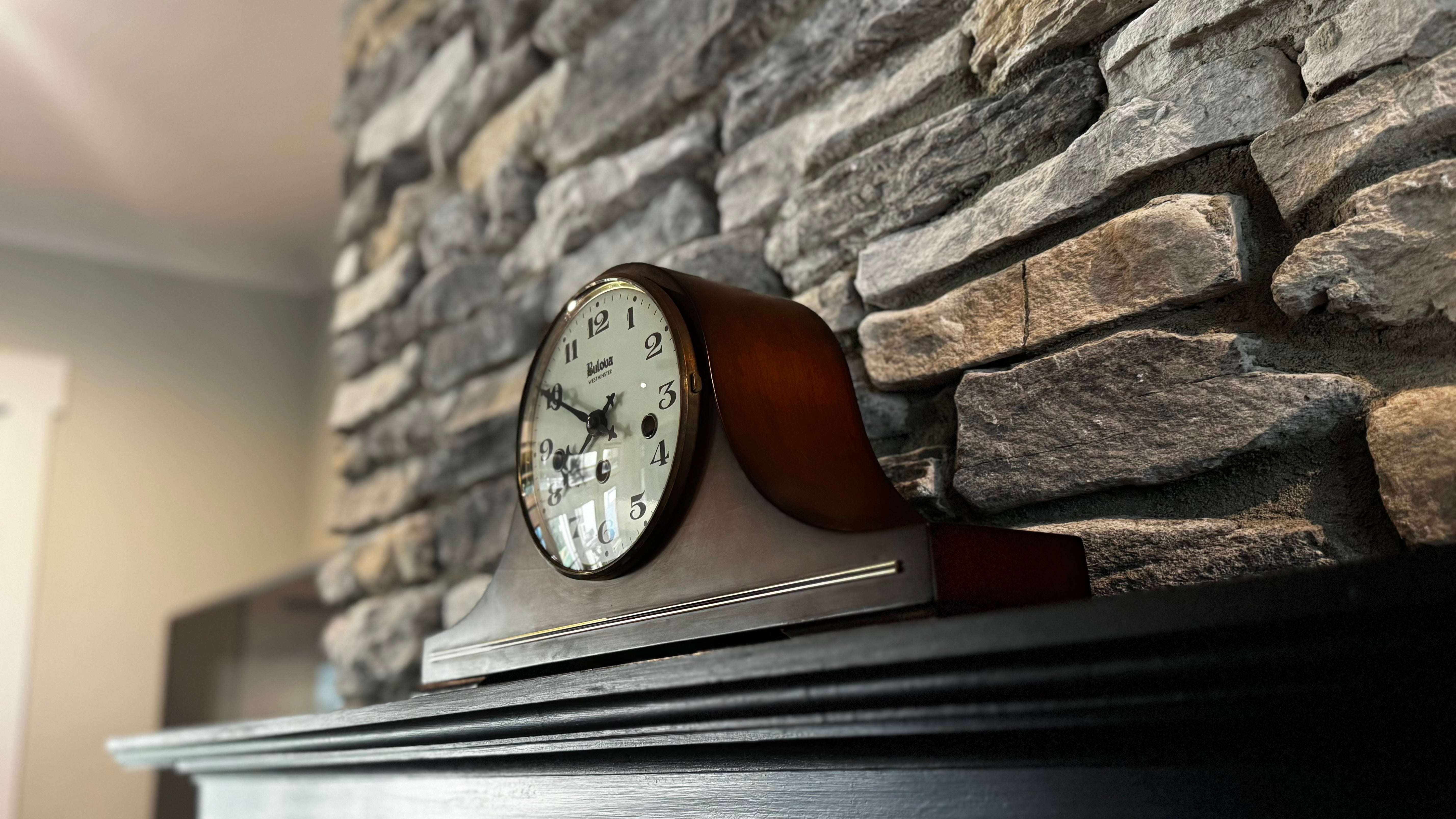
Gram had a Bulova tambour clock that played the Westminster chime, along with her Bulova Tempus Fugit bracket clock. When those chimes rang, I felt like I was in church. As a child, it all seemed so amazing and fancy. Gram was always dressed to the nines, so somehow those beautiful clocks suited her perfectly.
Mémère had a Seth Thomas Adamantine mantel clock. When the house was quiet, you could hear the pendulum in the back ticking steadily back and forth. Then, on the hour, it announced the time with its gong.
Sometime in the late 1970s, that clock stopped working. But one story about it has stayed with our family ever since. On Halloween, when my great-grandmother passed away, the clock—although no longer running—suddenly gonged.
After that, it sat silent for decades in my mom and dad’s house.
Mom had a rule for us kids when it came to the things in their home: “If there’s something you like, put your name on it!”
So I did.
I put my name on the clocks and was told that someday they would be mine.
After college, I moved to North Carolina, and at some point in the early 2000's, I brought Mémère’s clock down with me to have it repaired. Looking back, it was probably nothing more dramatic than a proper cleaning and oiling, but at that point in my life I wasn’t asking about movements, bushings, pivots, or what exactly had been done. Mom and Dad paid the repairman, the clock came back to life, and we brought it back home to New York.
There it ran again in my parents’ house for years.
When Mom passed away in 2024, Mémère’s clock made the trip back to North Carolina with me.
And now it is here.

Mémère passed away in 1982. Gram passed away in 1997. Yet the clocks I remember from their homes are still with me today—still ticking, still chiming, and still carrying pieces of those homes and those people forward.
And clocks were not my only connection to craftsmanship growing up.
Pépère spent part of his working life in the furniture business with Stickley, and I think some of that appreciation for beautiful wood, good furniture, and things built to last rubbed off on me too. Today, Stickley clocks hold a special place in my own collection. There is something about the combination of fine furniture and mechanical clockmaking that feels especially familiar to me. I have written more about the history of Stickley furniture and its unique place in clockmaking, but for me, that attraction is personal too.
Looking back, it is easy to see where all of this came from.
The clocks were there before I was a collector.
They were there before Just A Clock Collector.
They were simply part of my family.
And perhaps that is why I have never been able to look at a clock as merely a way to tell time.
Mémère’s clock belonged to another generation, spent decades silent, traveled from New York to North Carolina to be brought back to life, returned home, and eventually made its way south with me again.
Gram’s clocks still give me that same sense of occasion I remember as a child when the Westminster chimes began to play.
And Pépère’s connection to Stickley lives on in another corner of my collection.
Those were the things that started all of this for me.
Because a clock can carry much more than time.
It can carry a family.

Why Did Clocks Go by the Wayside?
Convenience won.
Once phones, computers, cars, appliances, and televisions began displaying the time, people no longer needed a dedicated household clock to know whether they were running late.
When an object stops being considered necessary, people begin questioning whether it deserves space in the home.
Clocks also got caught in a style backlash.
Floor clocks were dismissed as too formal. Mantel clocks became something associated with grandparents. Wall clocks were reduced to classrooms, offices, and kitchens.
Somewhere along the way, “traditional” became “outdated,” and “minimal” too often became “empty.”
Cheap, mass-produced clocks did not help. When every discount store sold a plastic clock designed merely to fill a blank wall, people began forgetting that a clock could represent genuine craftsmanship—an object made with wood, brass, steel, glass, precision, and patience.
We replaced an object with personality with a number glowing on a screen.
We Lost More Than a Way to Tell Time
A clock is one of the rare objects that can be a machine, a piece of furniture, a sculpture, a musical instrument, and a family memory all at once.
Mechanical clockmaking has always existed somewhere between art and engineering. The Metropolitan Museum of Art has described historic clocks and watches as a marriage of innovation and craftsmanship, often requiring clockmakers to work alongside cabinetmakers, engravers, enamelers, metalworkers, sculptors, and other skilled craftspeople. You can see examples in The Met’s exhibition archive, The Luxury of Time: European Clocks and Watches.
The case and dial were never merely packaging for the movement.
They were part of the achievement.
That is what still fascinates me.
A mechanical clock lets you see cause and effect. Stored energy moves through wheels and pinions. An escapement regulates its release. A pendulum or balance establishes a rhythm. The hands move because an entire miniature world behind the dial is working together.
Even a well-designed quartz clock offers something a screen cannot: functional art that belongs to the room.
It does not glow, interrupt, update, refresh, or ask you to swipe.
It simply keeps time.
A phone reports the time.
A clock gives time a presence.
Are Clocks Actually Making a Comeback?
I believe they are—but not because anyone suddenly needs help finding out whether it is 2:37.
Clocks are coming back as intentional objects.
In 2026, Better Homes & Gardens reported that wall clocks are returning as people move toward warmer, more expressive, and more character-filled interiors. That is a very different role from the purely practical kitchen clock of years past.
Clocks are no longer competing to be the most convenient way to tell time.
They are being rediscovered as a way to give a room movement, structure, character, and identity.
A large wall clock can anchor a room more effectively than another generic print. A mantel clock can bring warmth and scale to a shelf or fireplace. A skeleton clock can feel almost futuristic because its mechanics are completely exposed. A vintage clock can introduce history into an otherwise new room. A longcase clock can turn an empty corner into architecture.
This is not necessarily a return to the days when every household bought the same tall clock for the front hall.
It is a quieter and, frankly, more interesting comeback.
People are choosing clocks because they want something distinctive, tactile, and lasting.
A comeback does not require everyone to own five clocks. It might simply mean more people are willing to choose one really good clock instead of leaving another wall blank.
Are Only Collectors Keeping Clocks Alive?
Collectors deserve enormous credit.
Collectors preserve the knowledge. They identify makers and movements, save neglected pieces, support skilled repairers, document history, and understand why originality and condition matter.
Without collectors, countless clocks would have been stripped for parts, discarded, or forgotten.
But collectors are not the only people who can keep clocks alive.
The homeowner who buys one beautiful clock because it completes the room matters.
So does the family that restores a clock inherited from a grandparent.
So does the designer who places a mechanical clock in a modern office, the hotel that uses clocks as focal points, and the company that gives a mantel clock as a retirement or anniversary gift.
You do not need to know every movement number or own fifty clocks to appreciate one.
The person who chooses one clock because it speaks to them is every bit as important to the future of clocks as the person with a dedicated clock room.
Collectors protect the past.
New owners give clocks a future.
Why Does a Real Clock Still Belong in a Modern Home?
Because a clock tells the time without trying to steal your attention.
Because it can be art that moves.
Because wood, brass, glass, and steel develop character instead of becoming obsolete when the next software update arrives.
Because winding a mechanical clock can become a small weekly ritual.
Because a chime can become part of the sound of home.
Because the right clock does not make a room look old.
It makes the room look considered.
A modern home does not need to resemble a museum for a clock to belong in it. In fact, contrast is often what makes a clock most compelling.
A traditional clock against a clean wall.
A brass skeleton movement in a minimalist room.
A Mid-Century Modern clock above a contemporary credenza.
A stately floor clock surrounded by modern furniture.
Clocks can be traditional, modern, nautical, industrial, whimsical, architectural, or almost impossible to categorize.
There is no single “clock look.”
There is only the right clock for the right person and the right space.
Are Wall Clocks Still in Style?
Yes—but the clock needs to be chosen deliberately.
The days of hanging a tiny, forgettable clock in the middle of a large wall may be behind us. The wall clocks attracting attention now are pieces with appropriate scale, distinctive materials, strong design, history, or visible movement.
A good wall clock is not filler.
It is a focal point.
Even designers who believe ordinary wall clocks can look dated acknowledge that the right piece, used intentionally, can add personality and visual impact. That debate is explored in House Beautiful’s discussion of whether wall clocks are dated or cool.
The lesson is not that every wall needs a clock.
The lesson is that the right wall deserves the right one.
Are Grandfather Clocks Coming Back?
Quietly, yes.
They are not suddenly returning to every foyer in America, but designers are beginning to treat longcase and grandfather clocks as dramatic architectural objects rather than unwanted furniture from another era.
In late 2025, House Beautiful highlighted the renewed appeal of grandfather clocks, including their presence, craftsmanship, sound, and ability to add character that mass-produced furniture often lacks.
A beautiful floor clock has height, movement, sound, woodworking, and presence. Very few pieces of furniture can offer all of that.
The revival is still selective, but that may be a good thing.
People are choosing these clocks because they truly want them—not simply because a formal home was once expected to have one.
Come On, People
We have enough black rectangles in our lives.
Enough charging cords.
Enough notifications.
Enough objects designed to be replaced in three years.
Give me gears. Give me a pendulum. Give me a dial that catches the light. Give me the slow movement of hands across a face. Give me a chime that makes a house feel inhabited.
Maybe that is the real reason I want people to look at clocks again.
Not every clock has to become an heirloom. But the right one can become part of the sound, rhythm, and identity of a home. It can be present for ordinary mornings, family dinners, holidays, celebrations, losses, and years that pass much faster than anyone expects.
Gram and Mémère could never have known that their clocks would still be with me decades later—or that those clocks, together with Pépère’s connection to Stickley, would help inspire an entire business called Just A Clock Collector.
But they are, and they did.
Their clocks did more than survive.
They carried something forward.
That is what no phone screen can do.
Clocks may have gone by the wayside as necessities. I believe they are returning as something more meaningful: objects we deliberately choose because they bring beauty, craftsmanship, movement, sound, and memory into our homes.
Collectors are certainly helping to keep clocks alive. But clocks will truly make a comeback when ordinary people choose one they love, place it in their home, live with it, and perhaps someday pass it on.
The clock you bring home today may become the clock someone remembers you by.
Clocks never stopped being fascinating.
We simply stopped looking.
Whether you are a lifelong collector or simply ready to find one clock that gives your space movement, sound, and character, explore the newly added vintage clocks, browse the complete vintage clock collection, or discover factory-new Hermle clocks.
Find the one that makes you stop and watch.

Just A Clock Collector