The History of the Whittington Chime
Of the classic clock chimes, Westminster is the most famous.
St. Michael has its Charleston story.
Whittington has something different.
Whittington is the chime of London folklore.
It is tied to the famous Bow Bells of St Mary-le-Bow in Cheapside, London, and to the legend of Dick Whittington, the boy who supposedly heard the bells calling him back to the city and went on to become Lord Mayor of London.
For clock collectors, that gives the Whittington chime a special charm. It is not just another melody on a triple-chime clock. It carries a story of bells, ambition, London streets, old church towers, and a legend that has survived for centuries.
Where the Whittington Chime Gets Its Name
The Whittington chime takes its name from Dick Whittington, one of the most famous figures in London folklore.
The story says that young Dick Whittington was leaving London after failing to find success. As he reached Highgate Hill, he heard the bells of St Mary-le-Bow ringing behind him.
According to the legend, the bells seemed to say:
Turn again, Whittington.
Lord Mayor of London.
Dick turned back, returned to London, and eventually became Lord Mayor.
Like many great legends, the story is not completely the same as the history. The real Richard Whittington was not simply a poor runaway boy with a cat. He was a successful merchant, financier, and civic leader. But the legend became so beloved that it took on a life of its own.
And the bells at the center of that legend became known around the world.
The Bow Bells of St Mary-le-Bow
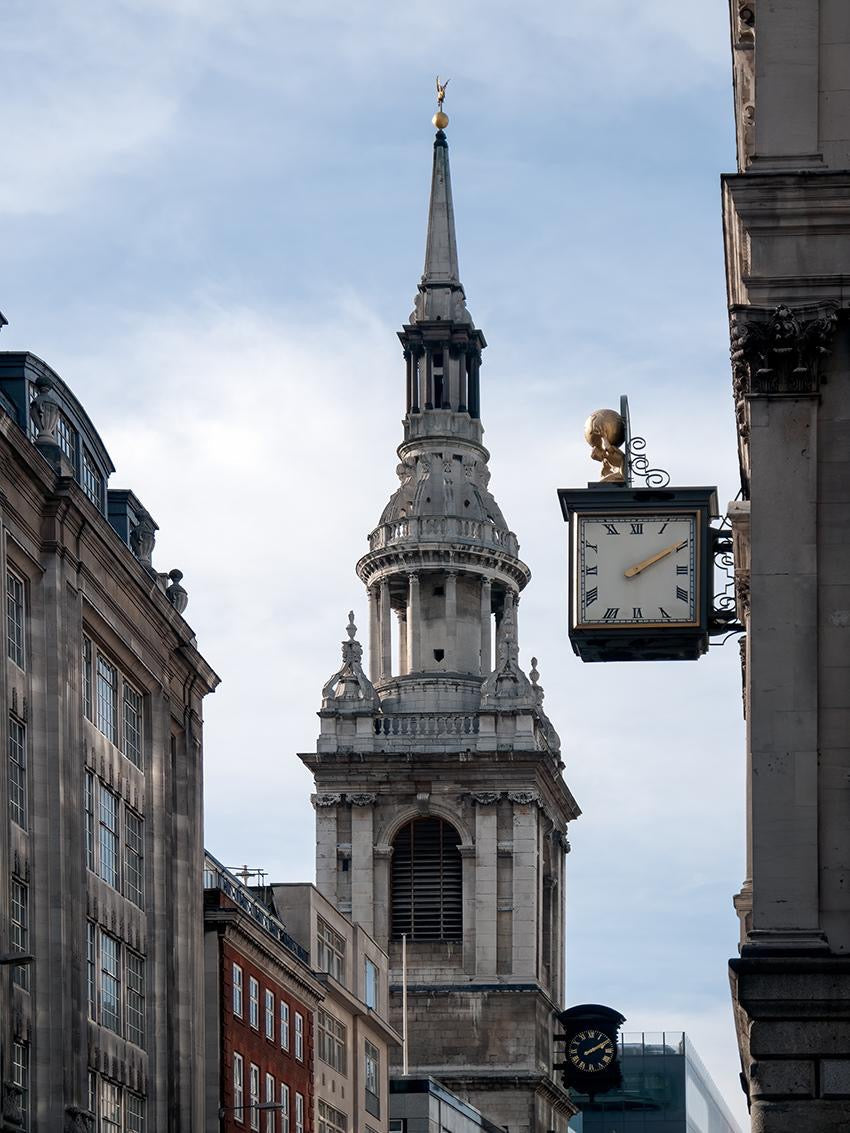
St Mary-le-Bow is one of the most famous churches in the City of London.
Its bells, known as the Bow Bells, have been part of London life for hundreds of years. They were used to mark time, signal curfew, and help organize the rhythm of daily life in the city.
For many Londoners, bells were not simply decoration. They were public sound. They told people when to work, when to stop, when to gather, and when the hour had passed.
The Bow Bells became especially famous because of several traditions connected to them.
They are linked to the legend of Dick Whittington.
They appear in the nursery rhyme Oranges and Lemons.
They are associated with the traditional idea that a true Cockney is someone born within the sound of Bow Bells.
That is a remarkable amount of history for one set of bells.
Why Is It Called “Whittington” Instead of “Bow Bells”?
That is a good question.
The chime is sometimes also associated with St Mary’s or St Mary-le-Bow, but “Whittington” became the more romantic name because of the legend.
The name gives the melody a story.
A clock described as having “Whittington chimes” sounds more distinctive than simply saying it has another quarter-hour melody. The name immediately points to old London, church bells, and the famous tale of Dick Whittington being called back to the city.
That kind of story matters in clockmaking.
Mechanical clocks have always been more than machines. They are objects of memory, tradition, and atmosphere. A melody with a name and a story gives the clock more personality.
Whittington and the Triple-Chime Clock
Today, most collectors encounter Whittington as one of the three classic melodies on a triple-chime clock:
Westminster
St. Michael
Whittington
Westminster is usually the best known and most familiar.
St. Michael has a dignified American connection through Charleston.
Whittington feels old-world, English, and slightly more unusual.
That is one reason collectors enjoy it. Many people have heard Westminster their whole lives. Whittington is less common, so it can make a clock feel more distinctive.
On a triple-chime movement, the owner can select the melody they want to hear. Some prefer Westminster because it is familiar. Others choose Whittington because it feels a little more special.
Why Clockmakers Used Whittington
Clockmakers used Whittington because it gave buyers a meaningful alternative to Westminster.
A good chiming clock is not just about keeping time. It is about sound. The chime becomes part of the room. It changes the personality of the clock.
Whittington offered clockmakers a melody with several advantages.
It had a historic name.
It was connected to famous London bells.
It sounded different from Westminster.
It gave triple-chime clocks more variety.
It made the clock feel more refined and special.
For buyers, that mattered. A clock with Westminster alone was classic. A clock with Westminster, St. Michael, and Whittington felt more impressive.
It gave the owner choice.
Whittington vs. Westminster
Westminster is orderly, familiar, and grand.
Whittington is a little more playful, old-world, and distinctive.
That difference is part of its appeal.
Westminster feels like public ceremony. It is the sound many people associate with Big Ben, Parliament, and traditional clock towers.
Whittington feels more like a story. It has the flavor of London streets, Bow Bells, and a young man turning back toward his future.
Neither chime is better in every clock. They simply create different moods.
A formal floor clock may sound wonderful on Westminster.
A rich bracket clock or mantel clock may feel especially charming on Whittington.
That choice is one of the pleasures of owning a triple-chime mechanical clock.
A Chime Built on Legend
The most important thing to understand about Whittington is that its power comes from legend as much as documented history.
The real Richard Whittington was a wealthy and important man. The famous story of the poor boy, the cat, and the bells developed later. But that does not make the chime less meaningful.
In many ways, it makes it more interesting.
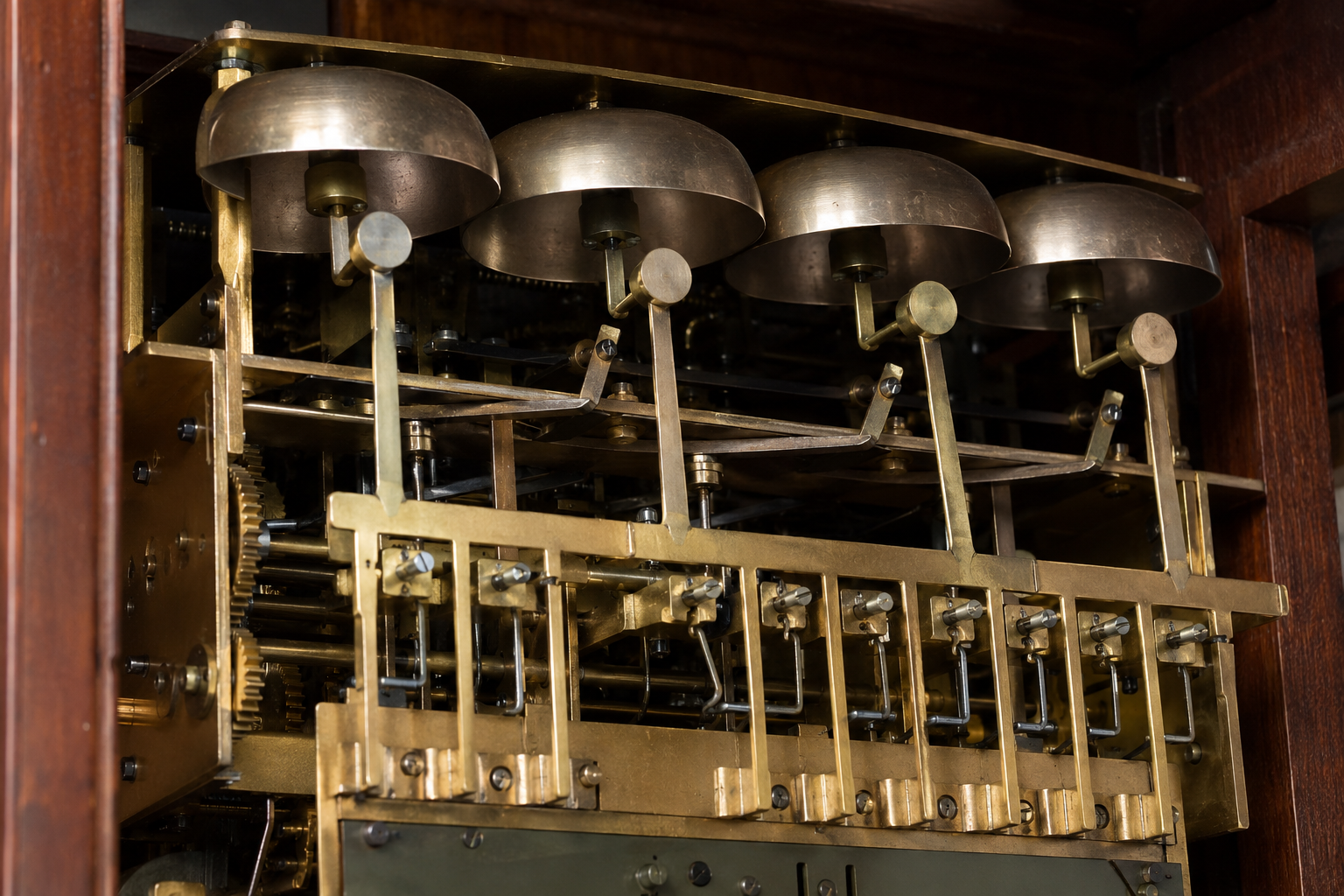
Clock history is full of both engineering and romance. The engineering gives us the movement, hammers, gears, and bells. The romance gives us the names, stories, and traditions that make people care.
Whittington has both.
It is a chime melody used in mechanical clocks, but it is also a reminder of how deeply bells were once woven into daily life.
What to Listen for in a Whittington Chime Clock
If you are considering a clock with Whittington chimes, listen carefully.
The chime should play clearly at the quarter hours. The hammers should lift and fall properly. The melody should sound even, not rushed or uneven. The hour strike should match the correct hour.
If the clock has a selector, make sure it moves properly between Westminster, St. Michael, and Whittington. If it has a silence feature or night shutoff, that should also be checked.
As with any vintage mechanical clock, condition matters.
A clock may have a beautiful Whittington chime system and still need service. That does not necessarily make it a bad clock. It simply means the buyer should understand what is working and what may need attention.
Why Collectors Still Love the Whittington Chime
Collectors love Whittington because it is different.
It is not as common as Westminster. It is not as strongly American in story as St. Michael. It has its own identity.
It feels connected to old London.
It feels tied to church bells and city streets.
It carries one of the most famous legends in English civic history.
And on the right clock, it sounds wonderful.
That is why Whittington remains one of the classic chime choices. It gives a mechanical clock not only a melody, but a story.
A Westminster clock feels timeless.
A St. Michael clock feels stately.
A Whittington clock feels historic, charming, and full of character.
For collectors, that is what makes it special.

Just A Clock Collector