What Makes a Vintage Clock Valuable? A Buyer’s Guide to Condition, Quality and Price
Two vintage clocks can look similar in photographs and still have very different values.
One may be complete, correctly identified, tested, and ready to display. The other may be missing its key or pendulum, contain an incorrect movement, have an unknown operating condition, or require significant work after purchase.
This is why determining what a vintage clock is worth is rarely as simple as searching for the maker’s name and choosing the lowest price you find online.
The value of a vintage or antique clock can be influenced by its maker, movement, case, age, originality, condition, rarity, completeness, operating status, and current buyer demand. Where and how the clock is being sold also matters.
This guide explains what buyers should consider when comparing vintage clocks and why the least expensive example is not always an equal comparison.
VINTAGE CLOCK VALUE IS NOT ONE FIXED NUMBER
A clock does not have one universal value that applies in every situation.
The same clock may have several different values depending on the purpose of the valuation and the market in which it is being sold.
An auction value reflects what bidders are willing to pay at a particular auction on a particular day.
A local private-sale value may reflect a cash transaction with no shipping, limited buyer protection, and little or no testing.
A dealer-purchase value is what a dealer may be willing to pay while accounting for inspection, repairs, overhead, marketing, storage, and the risk that the clock may take time to sell.
A specialty retail price reflects what a knowledgeable seller is asking after identifying, photographing, describing, preparing, marketing, packing, and supporting the clock.
An insurance or replacement value may represent what it could cost to replace the clock with a comparable example through an established retail source.
These numbers may all be different without any of them necessarily being dishonest or incorrect.
When comparing prices, the first question should not be, “Which clock is cheapest?”
The better question is, “Are these clocks being sold under comparable conditions?”
THE MAKER CAN HAVE A MAJOR EFFECT ON VALUE
The name on the dial or movement is often the first thing buyers notice.
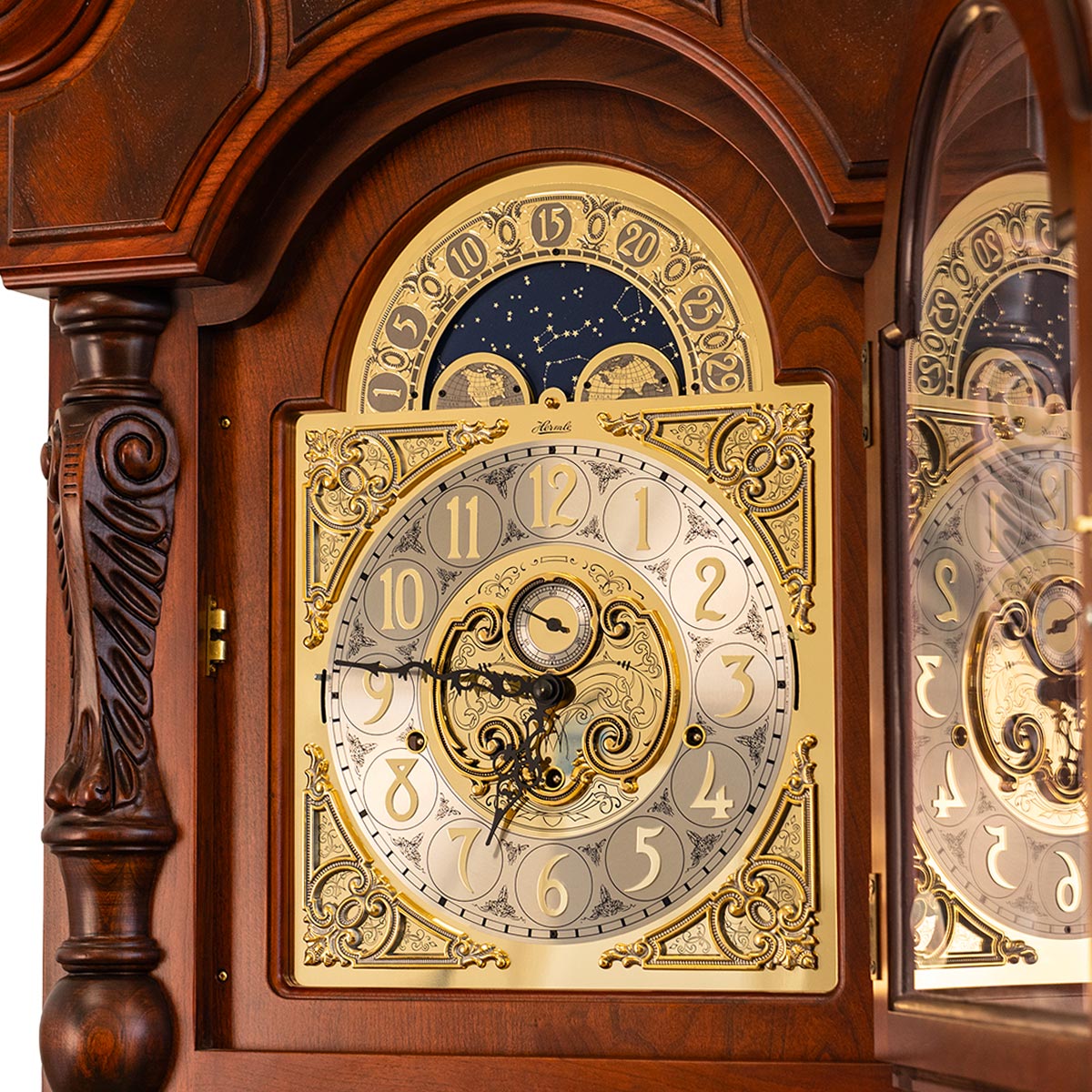
Established manufacturers such as Howard Miller, Seth Thomas, Hermle, Kieninger, Sligh, New England Clock Company, Elliott of London, Comitti, Junghans, Schatz, Ansonia, Sessions, Ingraham, Gilbert, and Waterbury can attract buyers who recognize the maker.
However, a respected name does not automatically make every clock rare or highly valuable.
Many manufacturers produced clocks across several price levels and over long periods. Some models were produced in large quantities, while others were limited, unusual, or made for only a short time.
The maker is an important starting point, but the particular model, movement, case, age, condition, and demand must also be considered.
A common clock from a famous manufacturer may be worth less than an unusual clock from a lesser-known maker.
THE MOVEMENT IS THE HEART OF A MECHANICAL CLOCK
The movement is the mechanism that operates the clock.
For a mechanical clock, the movement may control:
Timekeeping
Hour and half-hour striking
Quarter-hour chimes
Westminster, Whittington, or St. Michael melodies
Automatic night silence
Calendar or moon-phase displays
Moving figures or automata
The quality and complexity of the movement can have a substantial effect on the clock’s desirability.
A time-only clock has a simpler movement than a triple-chime clock. A spring-driven mantel clock differs from a weight-driven regulator. A clock fitted with a high-grade Hermle, Kieninger, Urgos, or Elliott movement may appeal to a different buyer than a basic mass-produced model.
Buyers should also determine whether the movement belongs in the case.
A clock may have received a replacement movement during its life. That does not automatically make it undesirable. A professionally installed replacement movement can give an attractive clock many more years of useful operation.
However, originality may matter more for a rare, historically important, or museum-quality clock. The buyer should understand what is original, what has been repaired, and what has been replaced.
RUNNING IS NOT THE SAME AS FULLY FUNCTIONING
The phrase “it runs” can mean many different things.
A seller may have started the pendulum and watched the clock tick for several minutes. That does not necessarily confirm that it will run for a complete winding cycle, keep reasonable time, strike correctly, or play every chime melody as intended.
A mechanical chiming clock may need to be evaluated for several separate functions:
Does it continue running?
Does it keep reasonable time?
Does it chime at the correct quarter-hours?
Does it strike the correct number on the hour?
Does the silent setting work?
Does the night shut-off operate properly?
Do the melody selectors work?
Do all hammers and chime rods produce sound?
A detailed listing should explain what the seller has observed rather than relying only on the word “working.”
Vintage mechanical clocks can also require minor adjustment after transportation. Leveling, pendulum position, hammer alignment, chime sequence, and timekeeping can all be affected when a clock is moved.
Testing adds confidence, but it does not turn an older mechanical clock into a brand-new clock.
CONDITION AFFECTS BOTH APPEARANCE AND VALUE
Condition includes much more than whether the clock has scratches.
Buyers should consider the case, dial, glass, movement, hands, hardware, decorative pieces, and included accessories.
Age-related wear is normal on vintage clocks. Small marks, finish variation, light scratches, discoloration, and evidence of normal use may be expected.
More significant issues can have a greater effect on value:
Cracked or missing glass
Water damage
Loose veneer
Missing trim or finials
Severe case damage
Broken hinges or latches
A heavily damaged dial
Missing hands
Rust or corrosion
Movement damage
Improper repairs
Incomplete chime components
A clock does not need to be cosmetically perfect to be desirable. Many buyers appreciate honest age and character.
The important issue is whether the condition is accurately shown and described.
Clear photographs and specific disclosures allow a buyer to decide which imperfections are acceptable before purchasing.
ORIGINALITY CAN MATTER, BUT IT IS NOT THE ONLY CONSIDERATION
Collectors often place a premium on originality.
Original cases, movements, dials, hands, labels, glass, pendulums, weights, and decorative components can add confidence that the clock remains substantially as it was manufactured.
However, originality is not always straightforward.
Clocks are mechanical objects that may remain in use for decades. Springs break. movements wear. Glass gets damaged. Hands are lost. Pendulums are replaced. Previous owners make repairs.
A replacement part does not automatically ruin a clock.
The importance of originality depends partly on what the buyer wants.
A serious collector seeking a historically significant example may prioritize original components and untouched surfaces.
A buyer looking for a beautiful and dependable clock to use in the home may be comfortable with a replacement movement or carefully matched part, provided it is disclosed.
The best listings explain known replacements so the buyer can make an informed decision.
REFINISHING CAN HELP APPEARANCE BUT AFFECT COLLECTOR INTEREST
An original finish can be important, particularly on rare or historically significant clocks.
Heavy sanding, aggressive polishing, repainting, or complete refinishing can remove evidence of age and reduce interest among collectors who prefer original surfaces.
At the same time, not every refinished clock is undesirable.
A professionally refinished case may look beautiful and may be the right choice for a buyer who values appearance and home décor more than strict historical originality.
The key is understanding the market for the particular clock.
A rare early clock should generally be approached differently from a later decorative clock produced in larger quantities.
When originality is important, buyers should examine the finish, dial, labels, hardware, and movement carefully and ask questions before purchasing.
COMPLETENESS CAN MAKE A LARGE DIFFERENCE
A vintage clock may require specific components to operate properly.
Depending on the clock, these can include:
A winding key
A door key
A pendulum
Weights
A winding crank
A suspension spring
Finials
Side panels
Decorative trim
A wall bracket
Original instructions
A clock missing one of these parts may appear inexpensive, but the replacement may be difficult to locate or costly to reproduce.
Even when a substitute can be found, it may not match the dimensions, weight, finish, or design of the original.
A complete clock generally gives the buyer greater confidence and reduces the likelihood of an unexpected search for parts after delivery.
When comparing two clocks, check exactly what is included with each one.
RARITY DOES NOT ALWAYS GUARANTEE HIGH VALUE
Rarity can increase value, but only when buyers want the clock.
A clock may be rare because few were produced. It may also be rare because the style was not popular, the manufacturer was obscure, or few examples survived.
Demand matters just as much as scarcity.
A widely recognized model with strong collector demand may sell for more than a rarer clock that few people are actively seeking.
Features that can increase collector interest include:
An unusual case design
A highly regarded movement
A desirable chime system
A limited production run
A discontinued model
A connection to a known designer or furniture maker
An intact maker’s label
Original packaging or paperwork
An especially large or small size
A distinctive Mid-Century Modern design
Rare materials, inlays, carving, or metalwork
Rarity should be evaluated together with quality, condition, history, and market demand.
CASE QUALITY AND DESIGN MATTER
A clock is both a timepiece and a piece of decorative furniture.
The case may be made from solid wood, veneer, brass, marble, stone, porcelain, glass, acrylic, or a combination of materials.
Construction details can affect both appearance and value:
Solid wood versus lower-cost composite materials
Quality of the veneer
Beveled versus flat glass
Hand-applied decoration
Wood inlays
Brass ornamentation
Carved details
Cabinet joinery
Door fit and hardware
Dial and bezel quality
The style of the case also affects demand.
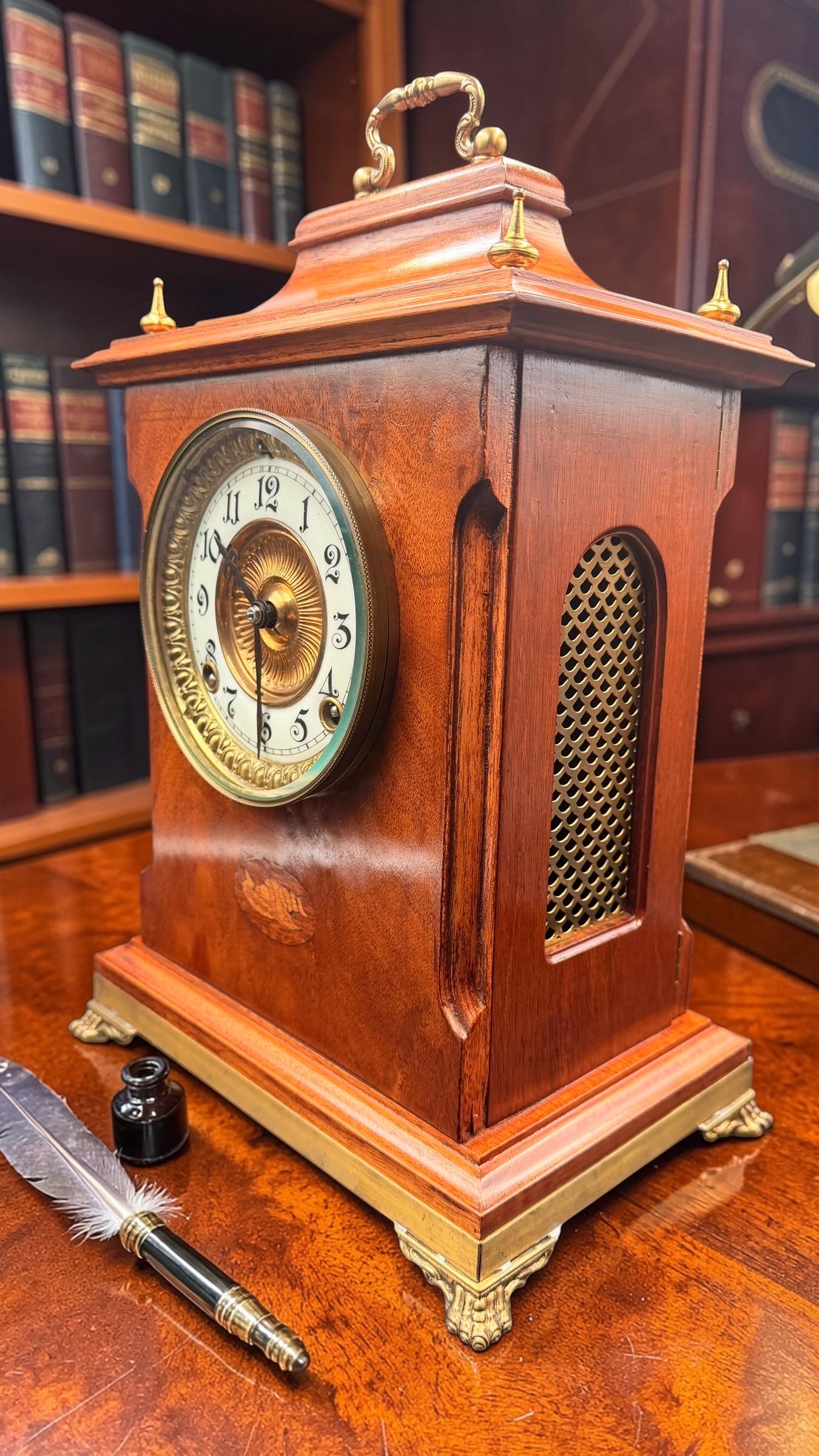
Traditional bracket clocks, architectural mantel clocks, regulators, banjo clocks, skeleton clocks, carriage clocks, Mid-Century Modern designs, and tall-case clocks appeal to different buyers.
The most valuable clock is not always the most elaborate. A clean and distinctive design can be just as desirable as a heavily decorated case.
THE CHIME AND STRIKE SYSTEM CAN AFFECT DESIRABILITY
Many buyers are drawn to vintage mechanical clocks because of their sound.
A clock may be:
Time-only
Hour strike
Hour and half-hour strike
Bim-Bam strike
Westminster chime
Triple chime
Ship’s bell strike
Musical or animated
A triple-chime movement that plays Westminster, Whittington, and St. Michael generally offers more complexity than a basic time-and-strike movement.
Automatic night silence, manual silence, volume control, and melody selection may also increase the clock’s usefulness in a modern home.
However, more complex does not always mean more desirable to every buyer.
Some collectors prefer the simplicity of a time-only regulator. Others want a strong hour strike or the full sound of a triple-chime movement.
Value depends partly on whether the clock’s features appeal to the person shopping for it.
SIZE CAN HELP OR HURT MARKET VALUE
Large clocks can be impressive, but they can also be difficult and expensive to move.
Floor clocks, oversized wall clocks, and heavy stone or brass mantel clocks may have a smaller pool of potential buyers because they require more space and specialized transportation.
Smaller clocks may be easier to display and ship, which can increase the number of interested buyers.
This does not mean small clocks are automatically worth more.
It means size affects the practical market.
A large clock may sell for less in a local auction because few bidders can transport it. The same clock may command a higher specialty retail price when it is properly identified, marketed to a national audience, packed correctly, and made available for insured shipping.
WHY ONLINE AUCTION PRICES CAN BE MISLEADING
Completed online sales can be useful, but they must be compared carefully.
Before using a sold listing as a comparable, ask:
Was it the same model?
Did it contain the same movement?
Was it complete?
Was it tested?
Did it run through a complete cycle?
Were the chime and strike functions working?
Was it sold for local pickup?
Was shipping included?
Was the case in comparable condition?
Were there undisclosed repairs or missing parts?
Was the listing properly identified?
Did the sale actually complete?
A clock that sold cheaply because it was untested, incomplete, poorly photographed, or available only for local pickup may not be comparable to a clock offered by a specialty retailer.
One unusually high or low sale also does not establish the value of every similar clock.
Look for several genuinely comparable examples and consider the conditions under which each one was sold.
WHY A SPECIALTY RETAIL PRICE MAY BE HIGHER
A specialty seller’s price may include considerably more than the original cost of acquiring the clock.
Before a vintage clock is offered for sale, the seller may spend time:
Finding and purchasing the clock
Transporting it safely
Researching the maker and model
Identifying the movement
Checking included parts
Testing its operation
Documenting defects
Photographing the clock
Writing an accurate description
Answering buyer questions
Preparing loose components
Packing the clock for shipment
Purchasing specialized packing materials
Insuring the shipment
Providing help after delivery
The seller also accepts the risk that the clock may require additional work, may be damaged before it sells, or may remain in inventory for an extended period.
The buyer is not simply purchasing an object.
The buyer is also paying for selection, information, convenience, presentation, packing, and access to a seller who understands clocks.
That difference is similar to buying a vintage automobile from a specialist rather than purchasing an unknown vehicle from a local auction.
The lower-priced option may be a good opportunity, but it is not necessarily the same product or buying experience.
PROFESSIONAL PACKING HAS REAL VALUE
Packing a vintage clock properly can require more than placing it in a box.
Pendulums, weights, keys, finials, and other loose components may need to be removed and wrapped separately.
Movement components may need to be secured.
Glass needs protection from both impact and pressure.
The clock case needs cushioning that prevents movement without placing stress on delicate trim, doors, or decorative pieces.
Large or unusually heavy clocks may require double-boxing, custom foam, reinforced cartons, or freight arrangements.
Packing materials, labor, insurance, and shipping can all add meaningful cost.
A local pickup auction result should not be compared directly with the delivered price of a clock that has been professionally prepared and insured for shipment.
CLEAR PHOTOGRAPHS AND DESCRIPTIONS REDUCE BUYER RISK
A detailed listing gives the buyer information that may not be available at an estate sale, flea market, or general auction.
Useful photographs may include:
The complete front of the clock
Both sides
The back
The dial
The movement
Maker’s labels
Model numbers
The pendulum
Weights and keys
Case damage or wear
The inside of the clock
Detailed photographs help confirm what is being purchased and allow buyers to evaluate condition before ordering.
A strong description should explain the clock’s size, movement, features, operating condition, included accessories, known flaws, and shipping expectations.
The more information a seller provides, the less uncertainty the buyer assumes.
Reduced uncertainty has value.
SENTIMENTAL VALUE IS DIFFERENT FROM MARKET VALUE
A clock inherited from a parent or grandparent may be priceless to its owner.
That emotional value does not always correspond with what another buyer will pay.
Likewise, a clock that was originally expensive may not retain the same market value decades later.
Styles change. Demand changes. Some manufacturers become more collectible, while others become less fashionable.
A clock can still be worth preserving even when its financial value is limited.
Repair decisions should consider both market value and personal importance.
A repair that exceeds the clock’s resale value may still be worthwhile when the clock has strong family meaning or will continue to be enjoyed in the home.
IS AN OLD CLOCK AUTOMATICALLY AN ANTIQUE?
The words “vintage” and “antique” are often used interchangeably in online listings, but they do not mean exactly the same thing.
Antique commonly describes an object that is at least 100 years old.
Vintage is a broader term generally used for older items from a recognizable previous period that have not yet reached antique age.
Age alone does not determine value.
A 150-year-old clock may be common, incomplete, or in poor condition. A much newer clock may be valuable because of its movement, design, maker, rarity, or demand.
Buy the clock itself, not simply the age claimed in the title.
HOW TO COMPARE TWO VINTAGE CLOCKS FAIRLY
When comparing prices, place the clocks side by side and examine the same factors.
Compare the exact maker and model.
Compare the movement.
Compare the case materials and size.
Compare originality and known replacements.
Compare cosmetic condition.
Compare whether each clock has been tested.
Compare the chime and strike functions.
Compare included keys, pendulums, weights, and accessories.
Compare shipping costs and packing quality.
Compare return terms and seller support.
Once those factors are considered, the price difference may make much more sense.
A lower price can still represent a good value, but only when the buyer understands what additional risk, work, or expense may come with it.
FREQUENTLY ASKED QUESTIONS
ARE ALL OLD CLOCKS VALUABLE?
No. Age is only one factor. Maker, model, movement, condition, originality, rarity, completeness, and buyer demand all affect value.
DOES A CLOCK BECOME MORE VALUABLE IF IT RUNS?
A functioning clock is generally more attractive to many buyers, but the amount it affects value depends on the clock. A rare clock may still be valuable when it is not running, while repair costs can exceed the value of a more common clock.
DOES REFINISHING A CLOCK REDUCE ITS VALUE?
It can, especially when the clock is rare and collectors value its original surface. A refinished clock may still be attractive and desirable to someone purchasing it for display and everyday enjoyment.
DOES A REPLACEMENT MOVEMENT REDUCE VALUE?
It depends on the clock and the buyer. Originality may be essential for an important collectible clock. For a decorative clock intended for regular use, a professionally installed replacement movement may be a positive feature when it is clearly disclosed.
WHY IS A CLOCK AT AN ESTATE SALE CHEAPER THAN ONE FROM A SPECIALTY SELLER?
An estate-sale clock may be untested, incomplete, sold as-is, and available only for local pickup. A specialty seller may have identified, tested, photographed, described, prepared, packed, insured, and supported the clock. The prices reflect different levels of service and buyer risk.
CAN I DETERMINE A CLOCK’S VALUE FROM ONE PHOTOGRAPH?
Usually not. Proper identification may require photographs of the dial, movement, labels, back, case, pendulum, weights, and any model or serial numbers. Condition and operating status also need to be considered.
IS AN ONLINE ASKING PRICE A RELIABLE COMPARABLE?
Not by itself. An asking price shows what a seller hopes to receive, not necessarily what a buyer paid. Completed sales are more useful, but only when the clocks and sale conditions are genuinely comparable.
IS AUCTION VALUE THE SAME AS RETAIL VALUE?
No. Auction value, private-sale value, dealer-purchase value, specialty retail value, and insurance replacement value can all be different.
BUYING A VINTAGE CLOCK WITH CONFIDENCE
A vintage clock should not be judged by price alone.
The lowest-priced example may be perfect for a buyer who enjoys restoration, has access to parts, and is comfortable accepting uncertainty.
Another buyer may prefer a clock that has already been identified, photographed, tested, described, carefully packed, and supported by a knowledgeable seller.
Neither approach is wrong.
The important thing is to understand what is included in the price and how much risk or additional work remains after the purchase.
When comparing clocks, look beyond the maker’s name and exterior appearance. Examine the movement, condition, originality, completeness, operation, seller information, packing, shipping, and support.
A quality vintage clock is not simply an old object. It is a functioning mechanical timepiece, a piece of decorative history, and something that may continue to be enjoyed for many years.
Explore the current selection of vintage and collectible clocks available from Just A Clock Collector.
You can also browse our vintage mantel clocks, vintage wall clocks, and Collector’s Favorites.
For additional purchasing guidance, read How to Buy a Vintage Mechanical Clock Online.
Each vintage clock is different. Read the complete description, examine all photographs, and ask any product-specific questions before ordering so you know exactly what to expect.

Just A Clock Collector